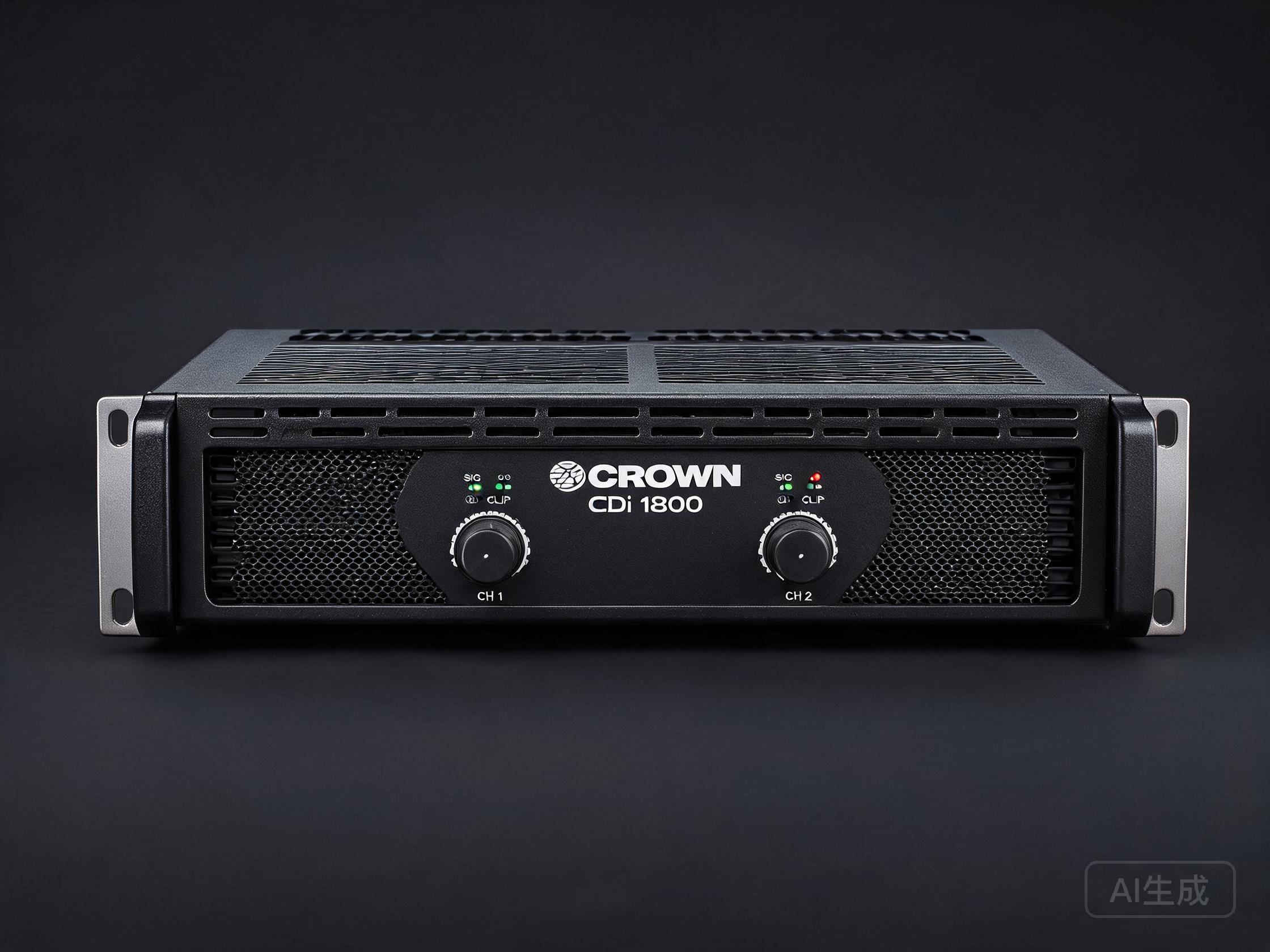
What Is the Full Form of AF Amplifier?
AF amplifier full form is Audio Frequency amplifier. In electronics and pro audio, "AF" is the standard abbreviation for Audio Frequency — the range of sound signals that human ears can hear, roughly 20 Hz to 20 kHz.
So an AF amplifier is simply an amplifier designed to boost signals inside that audible band. It takes a low-level audio signal — from a mixer, media player, or microphone preamp — and increases its voltage and current so it can drive loudspeakers at usable volume.
If you have ever seen "AF" on a schematic, a test bench, or an old service manual, it almost always refers to this audio band, not to radio or intermediate frequencies.
AF vs RF: Why the Distinction Matters
In electronics, amplifiers are often grouped by the frequency range they handle:
- AF (Audio Frequency) — roughly 20 Hz to 20 kHz. Used for sound reinforcement, KTV systems, home audio, and studio monitoring.
- RF (Radio Frequency) — typically above 100 kHz, extending into MHz and GHz. Used for radio transmission, Wi-Fi, and broadcast equipment.
- IF (Intermediate Frequency) — a mixing stage inside receivers, not a speaker amplifier.
An AF amplifier is optimized for fidelity and power delivery in the audible band. An RF amplifier is optimized for gain and signal integrity at high frequencies. They are not interchangeable, even though both are called "amplifiers."
This is why, when venue owners and AV integrators search for "af amplifier full form," the answer points them toward the audio side of the industry — the amplifiers that actually power speakers in bars, clubs, KTV rooms, and live venues.
How an AF Amplifier Works
A typical AF amplifier chain looks like this:
1. Input stage — receives a low-level line signal from a mixer or source device.
2. Voltage amplification stage — increases signal voltage to a usable level.
3. Driver stage — prepares the signal to drive the output devices.
4. Output stage — delivers high current to the loudspeakers.
5. Protection circuitry — guards against overheating, short circuits, and clipping.
In pro audio, AF amplifiers are usually classified by their output topology:
- Class AB — traditional, reliable, common in older and mid-range amps.
- Class D — lightweight, efficient, dominant in modern touring and install racks.
- Class H / TD — rail-switching designs that balance efficiency and headroom.
Each type has trade-offs in weight, heat, efficiency, and cost. For most venues, Class D has become the default because it delivers high power in a compact, rack-friendly chassis.
Where AF Amplifiers Are Used
AF amplifiers are the backbone of almost every sound reinforcement system. Common applications include:
- KTV and karaoke rooms — driving vocal and music channels at controlled levels.
- Bars, clubs, and lounges — powering distributed speaker systems.
- Live music venues and houses of worship — feeding main PA and monitor wedges.
- Conference rooms and auditoriums — supporting speech and presentation audio.
- Studios and home theaters — reference monitoring and surround playback.
When you are specifying an AF amplifier, the key numbers are power output per channel, impedance handling, THD, damping factor, and thermal design — not just the label "AF."
Buying Used AF Amplifiers: What to Check
For venue investors and AV integrators, the used market is a practical way to build or expand a system without paying new-unit prices. But used gear varies widely in condition, so focus on these points:
- Tested and load-banked — ask whether the amp was run under real load, not just powered on.
- Channel balance — both channels should deliver similar output at the same gain setting.
- Fan and thermal behavior — noisy or seized fans are a common failure point.
- Cosmetic and rack wear — bent rack ears or cracked faceplates can signal rough handling.
- Documentation — original manuals and service history add confidence.
At Acoustrade, used power amplifiers, speakers, line arrays, mixers, and microphones are supplied as tested units, so integrators can match amps to cabinets with predictable results. If you are building a KTV or club system, pairing a stable AF amplifier with the right loudspeakers and mixers matters more than chasing a single spec number.
FAQ
What is the full form of AF amplifier?
AF stands for Audio Frequency. An AF amplifier is an amplifier designed to boost signals in the audible range, roughly 20 Hz to 20 kHz.
Is an AF amplifier the same as a power amplifier?
Not exactly. "AF amplifier" describes the frequency band it handles; "power amplifier" describes its role in the signal chain. Most pro audio power amplifiers are AF amplifiers, but AF amplifiers can also be low-power preamp or line stages.
What is the difference between AF and RF amplifiers?
AF amplifiers work in the audible band (20 Hz–20 kHz) and are used for sound reinforcement. RF amplifiers work at radio frequencies (100 kHz and above) and are used for transmission and wireless systems.
Can I use a used AF amplifier for a KTV or club system?
Yes, provided the unit has been tested under load and matches your speakers' impedance and power requirements. Buying tested used amplifiers from a specialist supplier reduces the risk of mismatched or failing gear.
What specs should I check before buying an AF amplifier?
Check power output per channel, impedance rating, THD, damping factor, cooling design, and whether the unit has been load-tested. For used gear, also confirm channel balance and fan condition.