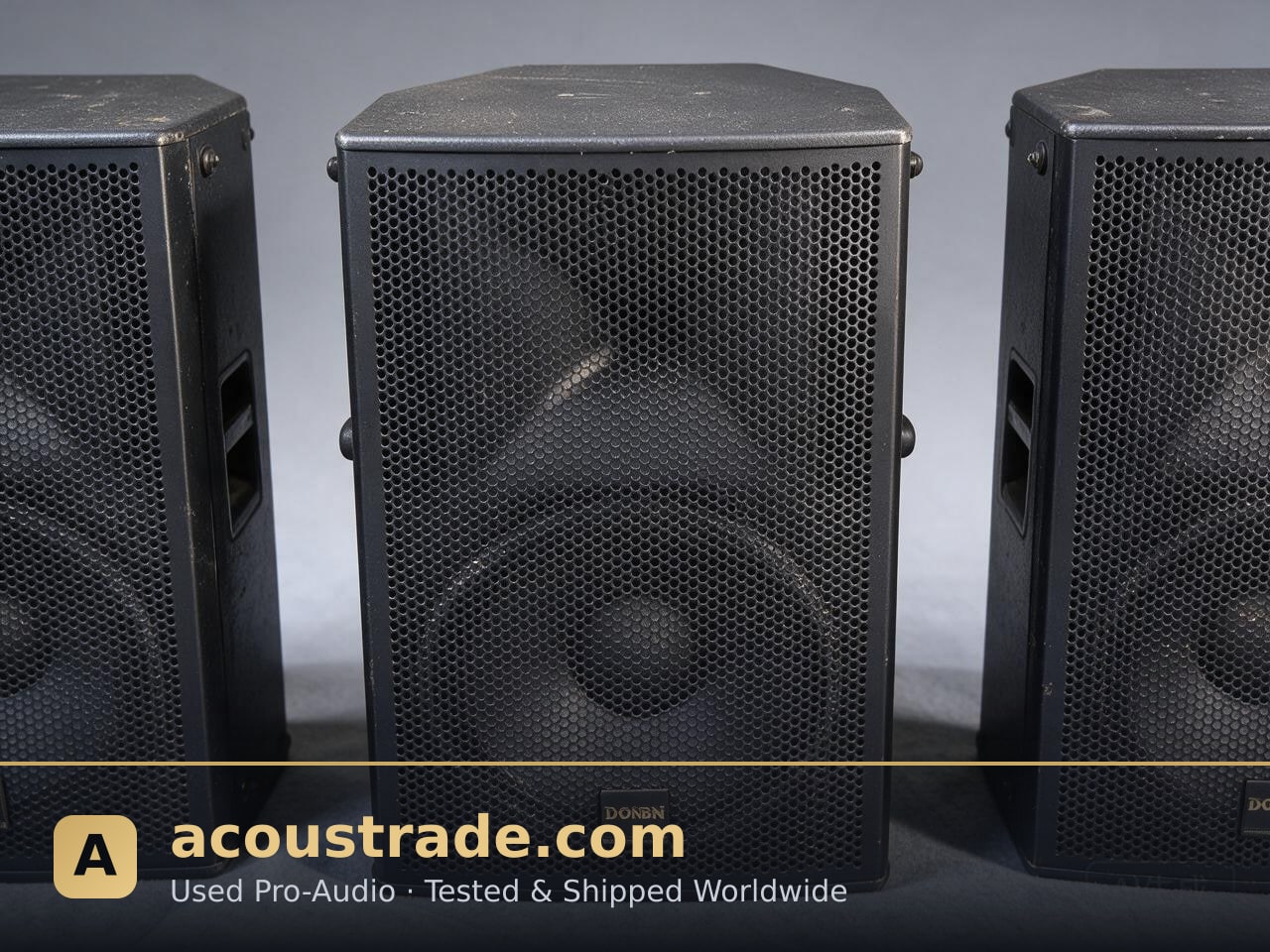
What 15-Inch Powered Speakers Are and Where They Fit
A 15-inch powered speaker (also called an active or self-amplified speaker) has a built-in power amplifier matched to its woofer and tweeter. You feed it a line-level signal and AC power — no separate amp rack, no speaker-level cabling math. The 15-inch woofer gives you more cone area and displacement than a 10- or 12-inch design, which translates into stronger low-mid output and more headroom for bass-heavy playback.
That combination makes 15-inch powered speakers a common choice for:
- KTV and private rooms — vocals, backing tracks and party playback in a compact footprint.
- Bars, lounges and restaurants — background to dance-level music with simple installation.
- Small clubs and multi-purpose halls — main PA or side-fill where a subwoofer may not be practical.
- Houses of worship, gyms and event spaces — speech plus music from one box.
- Mobile DJs and rental fleets — fast setup, fewer cables, easy replacement.
For overseas venue investors and AV integrators, the appeal is practical: fewer components to specify, shorter commissioning, and a system that a local technician can service without a full amp rack.
Key Specifications to Compare Before You Buy
Spec sheets are not standardized across brands, so compare like with like and treat marketing numbers with caution.
Power ratings
Look for continuous (RMS) amplifier power rather than peak or "max" figures. Peak numbers can be several times higher than continuous and tell you little about real-world behaviour. Check whether the rating is per driver or total, and whether it is measured with a defined test signal.
Maximum SPL and sensitivity
Maximum SPL tells you how loud the box can go; sensitivity tells you how efficiently it converts power into output. A high SPL figure without a stated measurement method is not very useful. For KTV rooms, moderate SPL with low distortion usually matters more than the headline maximum.
Driver and horn design
- Woofer: 15-inch cone, check voice coil size, magnet type and cone material.
- Compression driver and horn: horn directivity (for example 90° × 60°) determines coverage; narrow horns throw further, wide horns cover broader rooms.
- Crossover: active DSP crossovers are now common and allow preset tuning.
Connectivity and control
Typical inputs include XLR/TRS combo, RCA and sometimes Bluetooth. Useful extras: mic/line switch, master volume, DSP presets, ground-lift switch, and balanced throughput to daisy-chain boxes.
Cabinet and mounting
Check material (plywood vs. molded plastic), weight, rigging points, pole-mount socket and monitor-angle shape. For fixed installs, pole mount and M10 fly points are practical; for rental, weight and handle placement matter.
Matching 15-Inch Powered Speakers to the Room
A 15-inch two-way box is a versatile default, but it is not automatically the right answer for every space.
- Small KTV rooms (roughly 10–20 m²): a single 15-inch powered speaker per room, or a pair at modest level, is often enough. Prioritize clean vocal reproduction and controlled bass rather than maximum output.
- Medium rooms and bars: a pair of 15-inch boxes on stands or wall brackets, plus a subwoofer if the program is bass-heavy.
- Larger halls: use 15-inch boxes as main or fill speakers and plan subwoofers separately; do not expect a single 15-inch two-way to deliver club-level sub-bass.
- Outdoor or long-throw use: horn coverage and SPL headroom become more important than cabinet size alone.
As a rule, add a subwoofer when the content has strong low-frequency energy (dance music, DJ sets, some KTV backing tracks). A 15-inch two-way handles vocals and mid-bass well but has physical limits below roughly 50–60 Hz depending on the design.
New vs. Tested Used: What Overseas Buyers Should Know
Used pro audio is a mainstream option for venue projects, especially when the budget must cover many rooms. The difference between a good and a bad used purchase is testing and documentation.
When evaluating tested used 15-inch powered speakers, ask for:
- Driver and amplifier test results — sweep or tone test, distortion check, and confirmation that both woofer and HF driver work.
- Cosmetic and structural condition — cabinet cracks, water damage, grille dents, corner damage.
- Electronics condition — power supply health, pot/switch noise, input jack wear, fan noise.
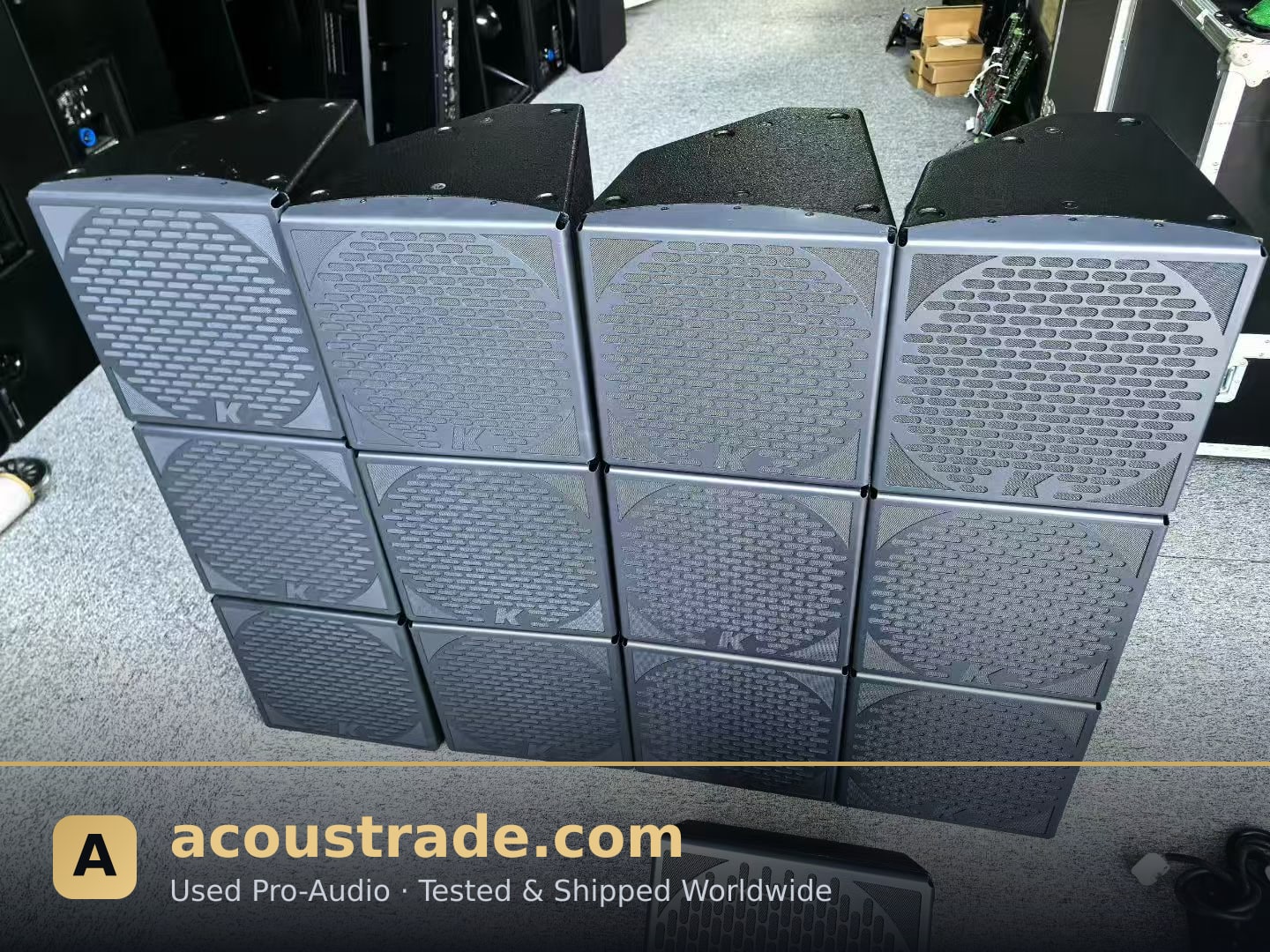
- Consistency across a batch — for KTV projects, matched units simplify tuning and spares.
- Voltage and plug type — confirm the amplifier is set for your destination voltage (for example 220–240 V) and that plugs suit local sockets.
- Documentation — photos, serial numbers, test notes and packing method.
Acoustrade supplies tested used pro-audio and KTV equipment, including powered speakers, amplifiers, mixers and microphones, with condition information so integrators can plan projects with fewer surprises. Always confirm the exact unit condition and test scope with the supplier before ordering.
Practical Tips for Installation and Longevity
- Set gain structure first. Start with the speaker volume around the middle, then set the source and mixer levels; avoid pushing the input into clipping.
- Use the built-in DSP presets for speech, music or monitor use where available.
- Protect the HF driver. Excessive boost at high frequencies and clipping are common causes of blown compression drivers.
- Plan power. Use circuits that can handle the combined draw of all speakers; avoid daisy-chaining too many units on one outlet strip.
- Keep spares. For multi-room KTV projects, one spare speaker per 10–20 rooms is a sensible buffer.
- Clean and inspect annually. Dust on drivers and blocked vents shorten amplifier life.
FAQ
Are 15-inch powered speakers good for KTV rooms?
Yes, they are a common choice for KTV and private rooms because they deliver strong vocal and mid-bass output from a single box. For small rooms, a single unit or a modest pair is usually sufficient; match level and tuning to the room rather than running at maximum.
Do I need a subwoofer with 15-inch powered speakers?
Not always. For vocals, speech and most background music, a 15-inch two-way is enough. If the program is bass-heavy — dance music, DJ sets or certain backing tracks — add a subwoofer for clean low-frequency output.
What is the difference between powered and passive speakers?
Powered (active) speakers have a built-in amplifier; you connect a line-level signal and AC power. Passive speakers need an external amplifier and speaker-level cabling. Powered designs simplify installation and reduce rack space.
How much power do I need for a 15-inch powered speaker?
It depends on the room size, program material and desired level. Rather than chasing a single number, compare continuous power ratings, maximum SPL with a stated method, and the speaker's intended use. Ask the supplier for test data where available.
Is it safe to buy used 15-inch powered speakers for a venue project?
It can be, provided the units are tested and documented. Ask for driver and amplifier test results, photos, serial numbers and confirmation of voltage. Buying from a supplier that tests and describes condition reduces risk compared with untested lots.