Crown DCi 8|600 Power Consumption: What the Specs Really Mean
If you are specifying the Crown DCi 8|600 for a venue, the number that matters as much as output power is how much it pulls from the wall. Power consumption drives circuit sizing, rack cooling, UPS choice and long-term electricity cost. This guide explains the published consumption figures for the DCi 8|600, what they mean in real installation terms, and how to plan around them.
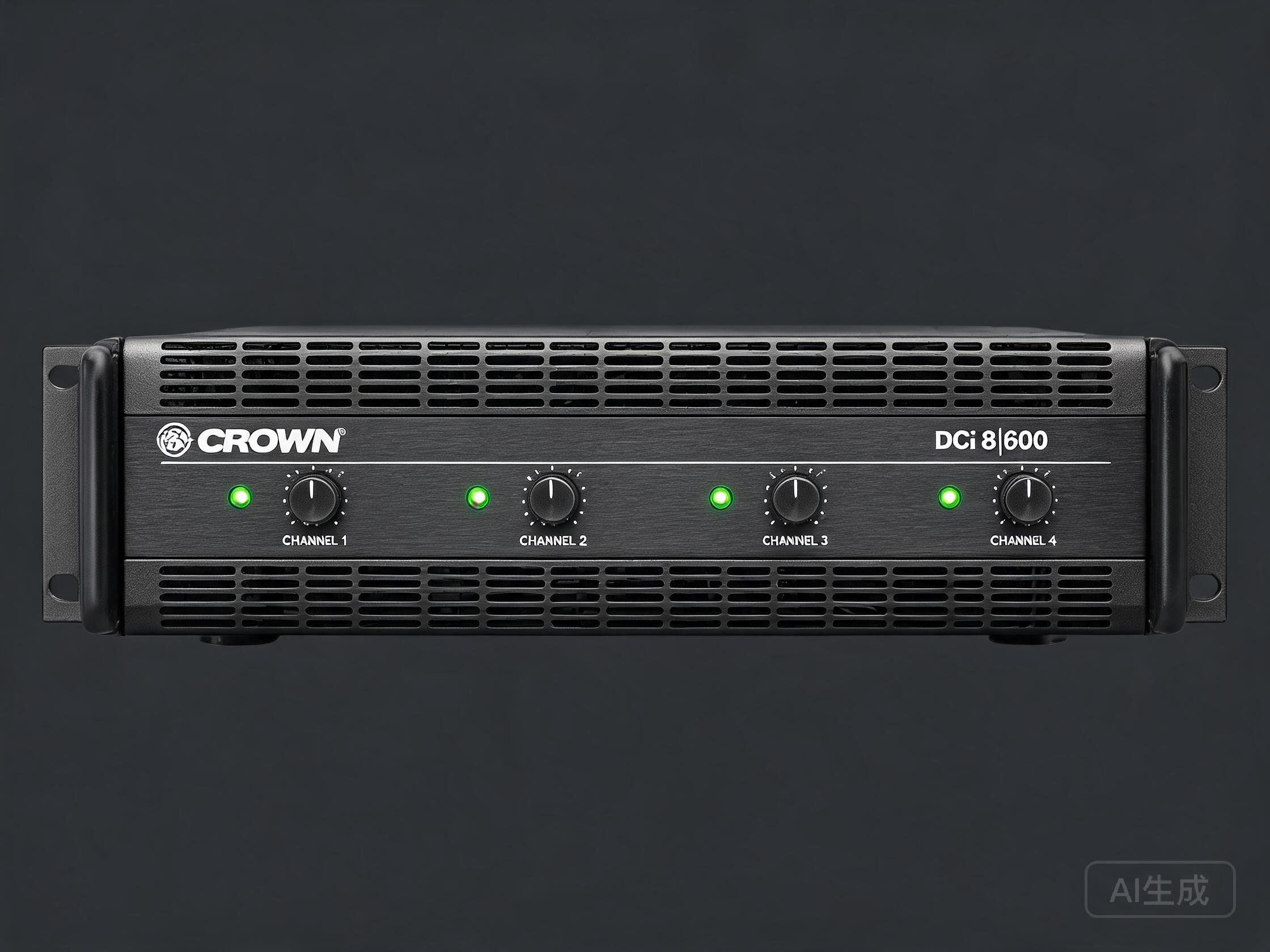
The DCi 8|600 is an eight-channel, 600 W-per-channel network amplifier from Crown's DCi Series, designed for installed sound — multi-zone restaurants, hotels, retail, houses of worship, conference rooms and KTV rooms. Buyers choose it because it packs eight amplified channels, Dante networking and DSP into a single 2U chassis, which keeps rack space and cabling low in distributed systems.
The Published Power Consumption Figures
Crown publishes several consumption values for the DCi 8|600 because draw depends on how hard the amplifier is working. The commonly cited figures are:
- Idle / standby draw: roughly 20–30 W with no signal, depending on network and DSP activity.
- Typical operating draw: well below full output in real program material, because music and speech are dynamic and rarely demand continuous full power.
- Maximum / full-power draw: the highest figure, reached only when all channels are driven hard simultaneously — a condition that almost never occurs in background music or speech reinforcement.
Always confirm the exact numbers against the current Crown datasheet for your unit's revision, since firmware and hardware revisions can shift standby figures slightly. Treat the datasheet as the authority and use the ranges here as planning guidance.
Why Full-Power Draw Is Rarely the Real Number
A common mistake is to size electrical circuits as if every channel runs at full rated output continuously. In practice:
- Program material has peaks and quiet passages; average power is a fraction of peak.
- In distributed systems, channels are often lightly loaded — a few watts per zone for background music.
- The amplifier's efficiency means a large share of input power becomes acoustic output, not heat.
For a typical multi-zone venue running background music and paging, actual wall draw commonly sits in the low hundreds of watts, not the theoretical maximum. That said, you should still design circuits for the worst case so the system is safe and code-compliant.
Planning Circuits, Cooling and Backup Power
Use the consumption specs to drive three practical decisions:
- Circuit sizing: base breaker and wiring on the maximum rated draw plus headroom, not on typical draw. Share a circuit only with equipment whose simultaneous peak is known.
- Heat load: every watt not converted to sound becomes heat in the rack. Plan ventilation or rack fans around worst-case dissipation, especially in closed KTV or hotel AV cupboards.
- UPS / backup: if the amplifier must ride through short outages, size the UPS for the load you actually run — often far below full power — and confirm the UPS can supply the inrush current at startup.
Because the DCi 8|600 concentrates eight channels in 2U, good rack airflow matters more than with spread-out amplifiers. Leave open rack units above and below where possible.
Matching Consumption to Real Venue Scenarios
| Scenario | Typical load | Planning note |
|---|---|---|
| Restaurant / retail background music | Light, a few channels active | Low draw; one shared circuit usually fine |
| Hotel multi-zone paging + BGM | Moderate, most channels active at low level | Size for moderate draw, ventilate rack |
| KTV rooms with vocal and playback | Higher peaks, dynamic | Design for peak, keep headroom |
| Conference / presentation | Speech, occasional peaks | Low average, plan for inrush |
In each case, the DCi 8|600's networked DSP lets you set limiters and gain structure so the amplifier never runs near its ceiling unnecessarily — which also keeps consumption and heat down.
Buying the DCi 8|600 and Related Gear
Acoustrade supplies tested used Crown DCi 8|600 amplifiers alongside matching power amplifiers, loudspeakers, line arrays, mixers and microphones for venue projects worldwide. Each unit is bench-tested before shipping, and we can advise on circuit planning and rack layout for your installation. If you are comparing models, ask us for consumption data on the specific revision we stock.
FAQ
Q: How much power does the Crown DCi 8|600 use at idle?
A: Expect roughly 20–30 W at idle with no signal, depending on network and DSP activity. Confirm against the datasheet for your unit's revision.
Q: Can I run the DCi 8|600 on a standard 15 A circuit?
A: Only if your actual load stays well below the circuit rating. At full output the amplifier can exceed a 15 A circuit, so size wiring and breakers for the maximum rated draw plus headroom.
Q: Does power consumption equal heat output?
A: Not exactly. Most input power becomes acoustic output; the remainder becomes heat. Plan rack cooling around the difference, using worst-case dissipation for safety.
Q: Why do my measured watts differ from the datasheet?
A: Real program material is dynamic, so average draw is usually lower than the maximum figure. Measurement method and load also affect readings.
Q: Is the DCi 8|600 a good fit for a KTV venue?
A: Yes — eight channels, networked DSP and limiters suit multi-room KTV systems, provided circuits and rack cooling are planned for peak demand.