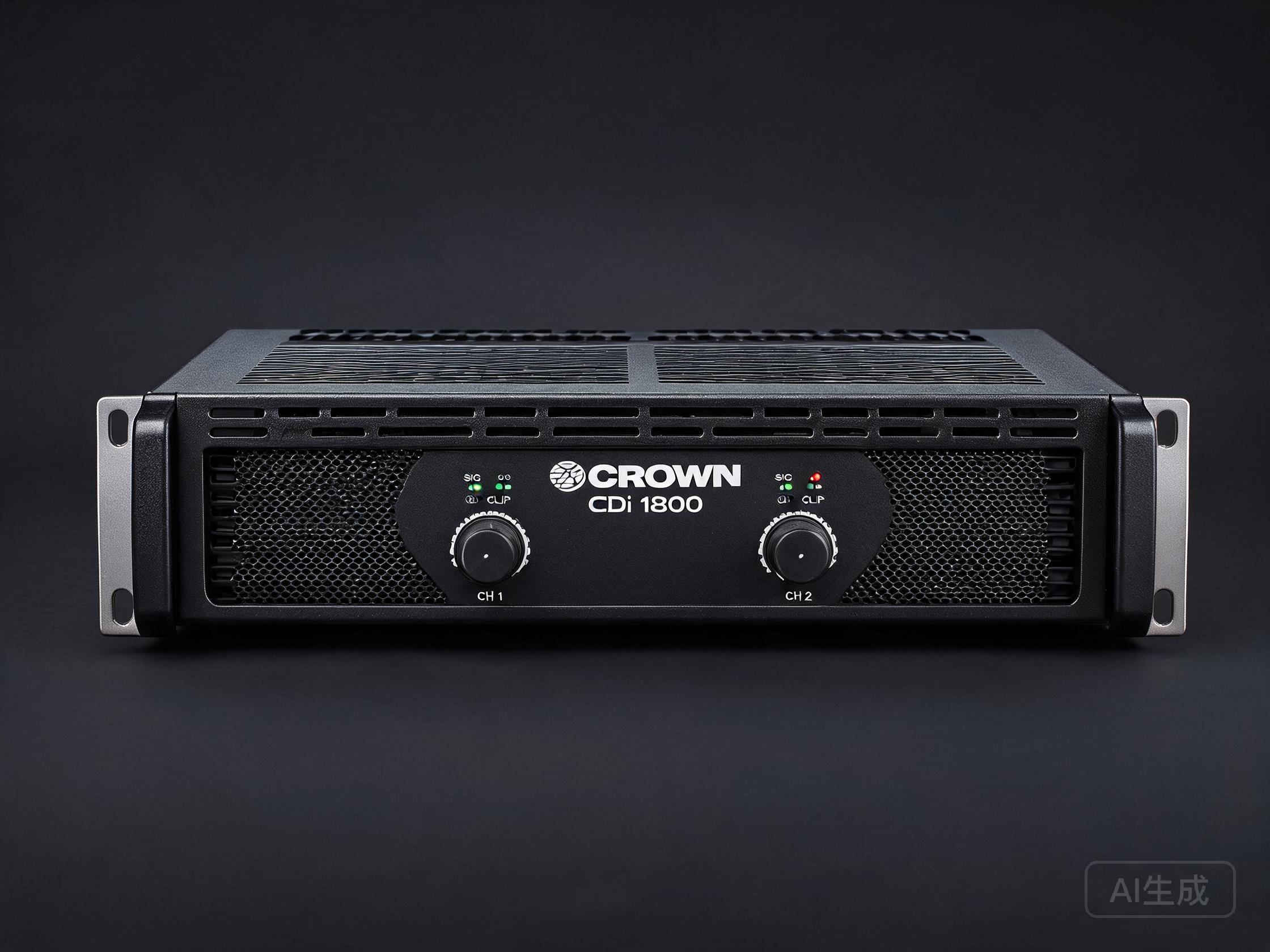
What this unit is and who it suits
The Crown DCi 8|600 is a four-channel Class D installation amplifier from Crown's DCi series — the line built for fixed installs rather than touring. In practice that means a 2U chassis, a switch-mode power supply, a rear-mounted gain structure designed to be set once and left alone, and a priority on efficiency and low heat output rather than on the road-case abuse a touring amp is expected to survive.
The unit in this listing came out of a 2019 KTV renovation. That is a useful piece of provenance: KTV rooms run long hours at moderate levels, so the amp has been used, but typically not driven into hard clipping night after night the way a club main system or a live rig would. It is listed in condition A, calibrated, and has been through a 48-hour burn-in before listing.
Who it suits: an integrator or venue owner who needs four channels of stable, predictable power for distributed audio — KTV rooms, restaurant and bar zones, retail, hotel public areas, conference rooms, or a modest multi-way speaker system where each channel drives a separate zone or a separate band.
Key specifications explained
4 x 600W @ 4Ω. Four independent channels, each capable of 600 watts into a 4-ohm load. Translated into real-world meaning: this is enough to drive a pair of 4Ω full-range cabinets per channel in parallel if the resulting impedance stays safe, or one substantial 4Ω speaker per channel with plenty of headroom. In KTV terms, one amp can comfortably cover several rooms, or one large room with multiple speakers, without bridging anything.
Class D. High efficiency, low heat, lighter than an equivalent Class AB design. The practical upside in a rack in a hot room is that you are not fighting thermal shutdown. The honest downside is that Class D amplifiers can be less forgiving of poorly matched loads and can produce more switching noise at the very top of the band than a good linear design — usually inaudible in a KTV or distributed-audio context, but worth knowing if you are doing critical monitoring.
20Hz–20kHz frequency response covers the full audible band. Nothing exotic here; it is what you want for music playback and speech.
THD < 0.02%. Low distortion. This figure is verified on this specific unit as part of our test process, not just quoted from the datasheet.
Gain and connectivity. The DCi series is designed around fixed installation: rear-panel gain trims, screw-terminal or barrier-strip style connections depending on configuration, and a control interface intended for system integration. Confirm the exact connector configuration on the unit you receive against your rack wiring before you commit.
Real condition and what our grading means for this listing
Condition A at Acoustrade means the unit is fully functional, clean, and free of damage that would affect performance or safe operation. For this listing specifically:
- It was sourced from verified liquidation inventory, with the KTV install as its documented prior use.
- It has been calibrated and passed a 48-hour burn-in test.
- THD was measured and verified at < 0.02%.
What condition A does not mean: it is not new, it is not boxed, and it will show the cosmetic marks of a unit that spent years in a rack. Expect rack-ear scuffs, minor fascia wear, and dust history on the rear panel. None of that affects audio performance, but if you are buying for a showroom-visible rack, budget for a cosmetic clean-up.
The MOQ is 2 units at $1,850 USD each, FOB. Factor freight and any import duties into your landed cost before comparing against a new unit.
Common problems to check on this model when buying used
These are the general failure points to inspect on any used DCi-series amplifier. We are not quoting failure rates — just the things that matter.
- Fan noise and fan health. Installation amps live in racks with restricted airflow. A tired or clogged fan is common and cheap to fix, but a fan that has stopped is a thermal risk. Listen for bearing noise and confirm airflow on both channels.
- Rear-panel connector wear. Screw terminals and barrier strips get over-tightened and stripped over years. Check that all terminations are intact and that nothing has been cross-threaded.
- Gain pot condition. Scratchy or noisy trims indicate dust ingress. On an install amp set once and forgotten, this is usually minor, but confirm the trims move smoothly across their range.
- Channel imbalance or a dead channel. Play a known reference through each channel individually. A partially failed output stage on one channel is the single most expensive repair on a multi-channel amp.
- Power supply behaviour under load. The switch-mode supply should be quiet and stable. Any buzzing, hesitation on power-up, or intermittent shutdown under load is a red flag.
- Rack-ear and chassis distortion. Bent rack ears suggest the unit was dropped or forced into a rack. Check the chassis is square.
Who should buy it / who should look elsewhere
Buy it if you are an integrator or venue operator who needs four channels of reliable, low-heat power for distributed audio or KTV rooms, you want documented test data rather than a marketplace seller's word, and you are comfortable buying tested used equipment at a meaningful discount to new.
Look elsewhere if you need a single high-power channel (a bridged stereo amp or a dedicated sub amp is the right tool), if you need touring-grade road reliability, if your rack has no airflow and you cannot add any, or if you need this week — FOB shipping with a 2-unit MOQ is not a same-day solution.
If your application is KTV or distributed audio at scale, this amp pairs naturally with the other tested used amplifiers and KTV equipment in our catalogue.