What to look for before you buy (the 5 checks that matter)
A mixing console is the piece of gear that decides whether a show happens or a service call does. When you are buying used units in quantity, you are not evaluating one desk — you are evaluating a batch, and a batch is only as good as its weakest unit. These five checks separate a workable lot from a future liability.
1. Fader and encoder life. Motorised faders are the first thing to fail on a digital desk. Ask for a fader cycle count if the platform reports one, and for a photo or video of a full bank sweep with the console powered. Static faders that stick, jump, or fail to return to zero are a rebuild, not a cleaning.
2. Power supply history. Most touring consoles use switch-mode supplies with a known service life. Ask whether the PSU is original, whether it has been replaced, and whether spare PSUs are available for the model. A console with no spare PSU supply chain is a console you cannot keep running.
3. Screen and surface condition. Touchscreens delaminate, and control surfaces wear through at the most-used encoders. On touchscreen-led mixers, confirm the panel responds across its full area, not just the centre.
4. Firmware and licence state. Confirm the installed firmware version and whether any paid plug-ins, channel-count upgrades or Dante/expansion licences are tied to the unit or to the original owner's account. Licences that do not transfer change the real price of the console.
5. Test documentation. A bench test report showing channel-by-channel input, phantom power, output routing and recording interface is worth more than any cosmetic description. If a supplier cannot produce one, treat the unit as untested and price it accordingly.
Representative stock currently in the Acoustrade catalogue:
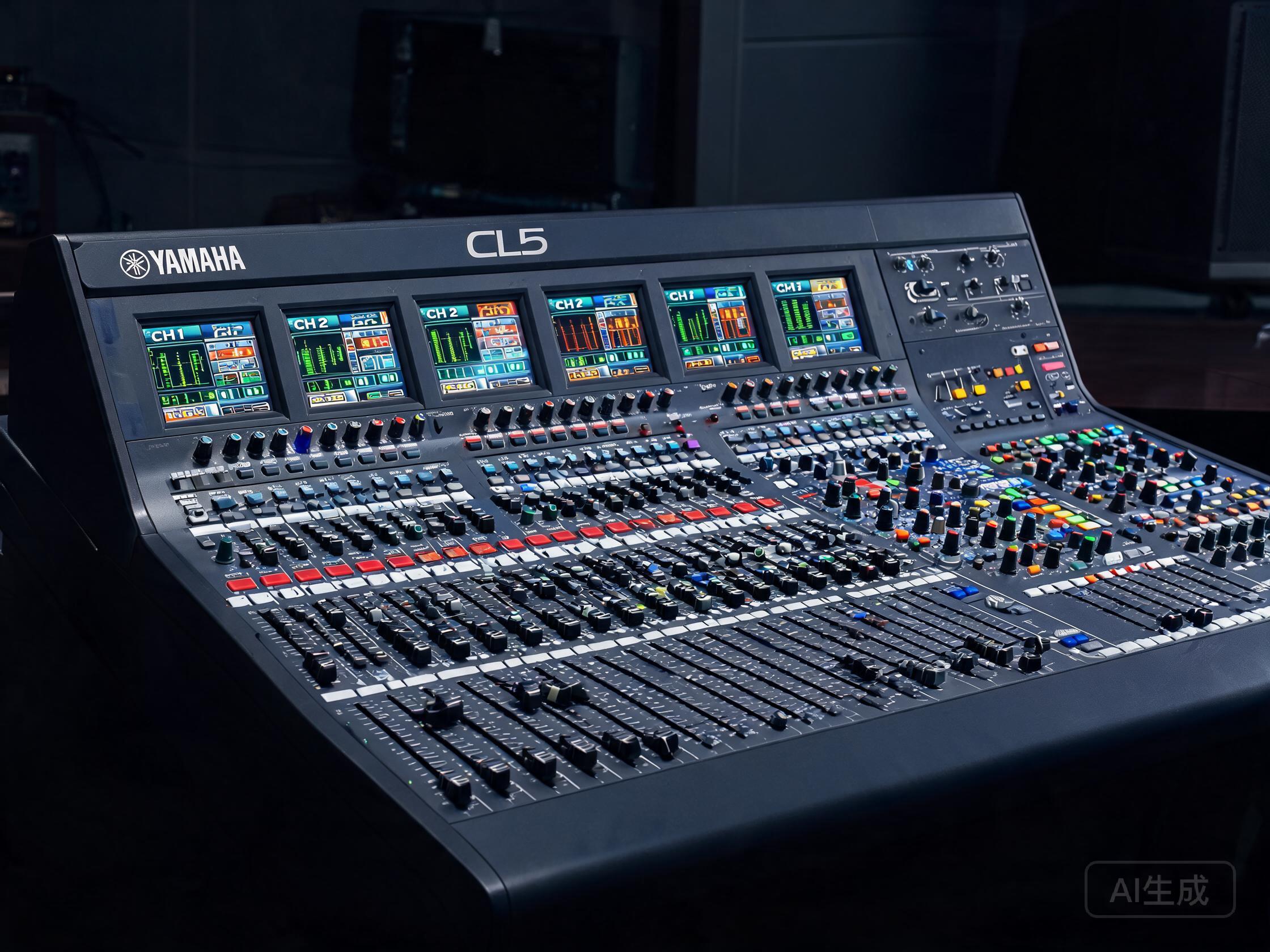
- Yamaha CL5 — 72 inputs / 32 outputs, D-PRE mic preamps, 96 kHz / 24-bit, condition B, FOB $3,200 USD
- QSC TouchMix-16 Pro — 22 channels (16 mic preamps), built-in FX and compression, iOS/Android/USB control, condition A, FOB $1,250 USD
Condition grading explained (what Grade A/B/C means in practice)
Grades are a shorthand, and every supplier defines them slightly differently. Ask for the definition in writing before you commit to volume.
- Grade A — Cosmetically clean, fully functional, minimal rack rash. Suitable for front-of-house in a permanent install or as a client-facing rental unit. The TouchMix-16 Pro above is a typical Grade A item: light use, complete, ready to deploy.
- Grade B — Working unit with visible wear: scuffs, faded silkscreen, a replaced knob or two. Electrically sound and gig-ready. This is where most bulk inventory sits, and it is usually the best value per channel. The CL5 listed above is a Grade B example — a 72-channel desk at a fraction of new pricing.
- Grade C — Functional but cosmetically rough, or with a known fault disclosed by the seller. Buy these for spare parts, for a fixed install where the desk lives behind a panel, or if you have in-house repair capacity.
For bulk orders, insist on a per-unit grade list with serial numbers, not a single grade for the lot.
Matching mixing consoles to your venue size and use case
Channel count should be driven by your worst realistic night, not your average one.
- Small bars, cafés and KTV rooms (up to ~16 mic inputs). A compact touchscreen desk handles bands, DJs and background music without a separate outboard rack. The TouchMix-16 Pro fits here, and its tablet control lets staff mix from the floor.
- Clubs and mid-size live rooms (24–48 inputs). You need scene recall, matrix outputs for delay speakers, and enough auxes for monitors. Look for desks with expandable I/O so you can grow without replacing the surface.
- Theatres, halls and multi-purpose venues (48–72+ inputs). This is the CL5 class: large frame, redundant-friendly, with the channel count to handle a full band plus playback, talkback and press feeds.
- Rental fleets and integrators. Standardise on one or two platforms. Common platforms mean shared spares, shared firmware knowledge and faster turnaround between jobs.
Voltage, plugs and certification for Russia / Middle East / South America / Africa
This is where bulk purchases most often go wrong, and where you should confirm every detail with your own electrician and customs broker rather than relying on a supplier's summary.
- Voltage. Professional audio gear is commonly built for 100–240 V, 50/60 Hz, but not always. Verify the label on each unit. Where a unit is fixed-voltage, a step-up or step-down transformer must be budgeted per console, not per shipment.
- Plugs and sockets. IEC C13/C14 inlets are near-universal on consoles, but the wall plug differs: Type C/F in Russia and much of Europe, Type G in the Gulf states and parts of Africa, Type D/M in South Africa, and a mix of Type A/B/C/I across South America. Ship with the correct mains lead or plan to re-terminate locally.
- Certification and marking. Many markets require their own conformity mark or import approval for mains-powered equipment. Requirements differ by country and change over time. Confirm the current rules with a local importer or regulator before you buy — do not assume a CE or UL mark is sufficient on its own.
- Earthing and generator power. Venues running on generators or unstable mains benefit from a proper power conditioner and consistent earthing. Budget for this at the design stage.
Shipping, customs and MOQ when importing from China
- MOQ. Suppliers typically set minimum order quantities per model or per shipment. Mixed pallets combining consoles, amplifiers and speakers often reach the threshold more easily than a single-model order.
- Packing. Consoles should ship in original flight cases where available, or in custom foam-lined crates. Faders and screens are the vulnerable points — insist on foam blocking over the control surface.
- Incoterms. FOB pricing means your responsibility starts at the port of loading. Compare FOB, CIF and DDP quotes on a landed-cost basis, including duty, VAT and local delivery, before deciding.
- Documentation. Commercial invoice, packing list, HS classification and country of origin must match the goods exactly. Mismatches are the most common cause of customs delays.
- Duty and VAT. Rates vary by country and by product classification. Have your broker confirm the current rate for mixing consoles and spare parts before you finalise your budget.
Common mistakes buyers make
- Buying on cosmetics alone, with no bench test report.
- Assuming licences and plug-ins transfer with the hardware.
- Ordering a single large-format desk when three mid-size desks would serve more rooms.
- Forgetting spare PSUs, fader knobs and mains leads in the first order.
- Treating FOB price as the final cost, then discovering duty, freight and VAT on arrival.
- Mixing too many console platforms into one fleet, then carrying six sets of spares.
- Skipping the local certification question until the container is already at port.