What to look for before you buy (the 5 checks that matter)
When you are buying speaker processors in bulk, the unit price is only one part of the equation. The real cost shows up later in failed units, mismatched firmware, and hours of re-tuning. Before you commit to a pallet, run these five checks.
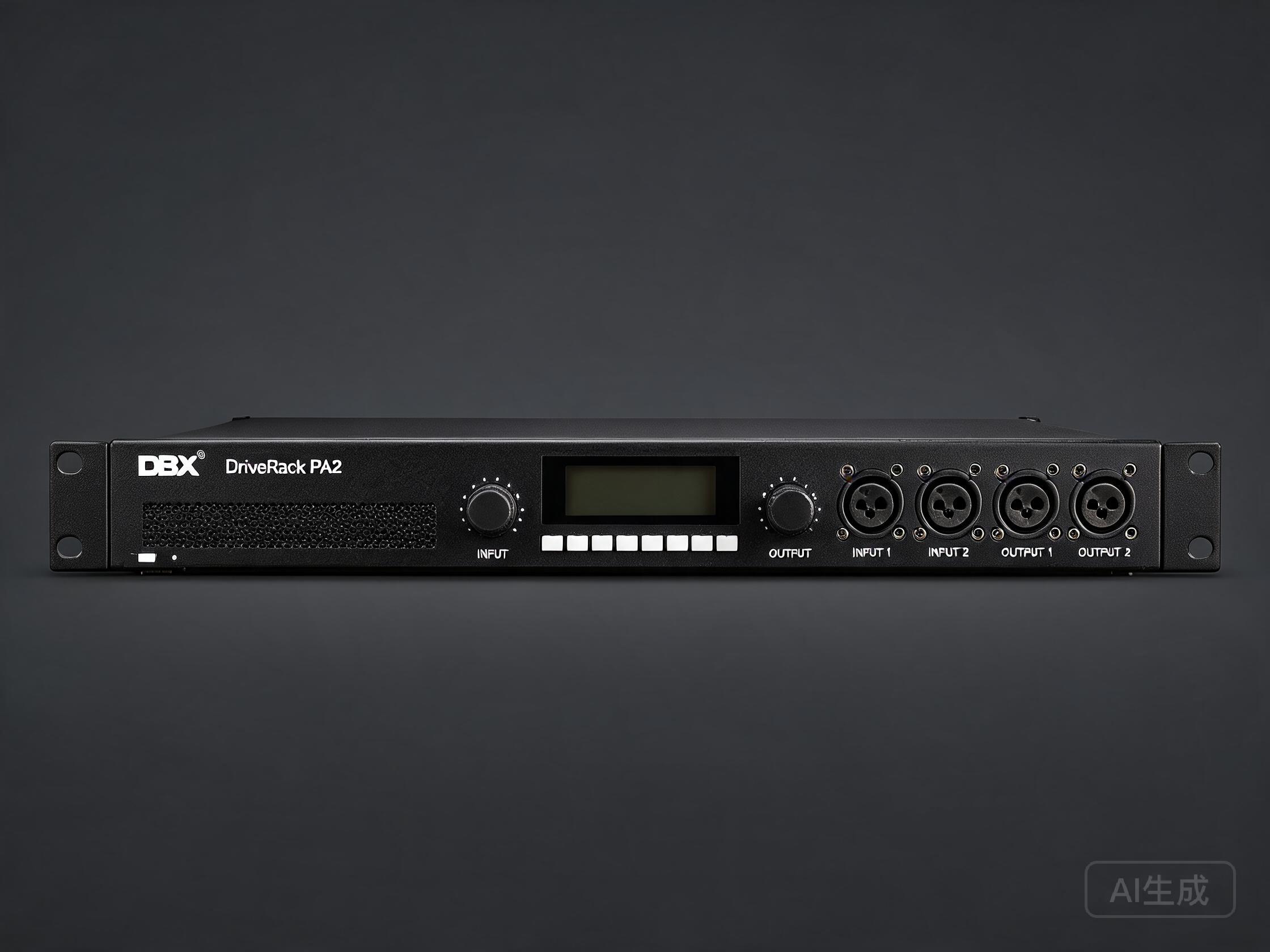
1. Input/output configuration. Count the channels you actually need. A 2-in/6-out processor like the DBX DriveRack PA2 covers a basic stereo 3-way system or a mono 4-way plus subs. If you are running multiple zones, you need more outputs per unit or more units. Mixing 2-in/4-out and 2-in/6-out boxes in one rack is a recipe for confusion during setup.
2. Processing feature set. Look for the functions that earn their keep: parametric EQ, crossover slopes, limiter, delay, and auto-EQ or RTA if you want faster room tuning. Avoid units that only offer fixed presets with no manual control. The DriveRack PA2, for example, includes RTA and Auto EQ, which shortens commissioning time on installs.
3. Firmware and software support. Ask the seller whether the unit runs the latest stable firmware and whether the control software is still available. Obsolete firmware can mean you cannot load presets from a laptop or tablet. For bulk orders, confirm that all units in the lot are on the same firmware version.
4. Physical condition of connectors and controls. XLR sockets, rotary encoders, and LCD screens are the first things to fail on a used processor. Loose jacks or dim displays are warning signs. On bulk lots, ask for photos of the rear panel and a short video of the unit powering up and passing signal.
5. Test documentation. A reputable supplier will provide a test report showing signal pass-through on all channels, noise floor check, and confirmation that the unit powers on and holds settings. If the seller cannot provide this, treat the unit as untested and price accordingly.
Condition grading explained (what Grade A/B/C means in practice)
Condition grades are not standardised across the industry, so always ask what the grade means for the specific seller. In general:
- Grade A — Fully functional, minor cosmetic wear. May have light rack rash or small scuffs on the chassis, but the faceplate, screen, and connectors are intact. Suitable for front-of-house or client-facing installs. The DBX DriveRack PA2 in our catalog is Grade A, FOB $380 USD.
- Grade B — Fully functional but with visible cosmetic wear: scratches, faded lettering, or a slightly bent rack ear. Electrically sound. Good for rental stock or back-of-rack use where appearance does not matter.
- Grade C — Working but with significant cosmetic damage or missing parts (knobs, rack ears, non-critical screws). May also have intermittent faults that the seller has disclosed. Best for spare parts or non-critical monitoring paths. Only buy Grade C in bulk if you have the technical capacity to repair and re-test.
For bulk orders, insist on a mix that matches your deployment: Grade A for client-facing rooms, Grade B for rental fleets, and Grade C only if you have a repair bench.
Matching speaker processors to your venue size and use case
Speaker processors are not one-size-fits-all. Match the unit to the job.
- Small venues, cafés, and KTV rooms. A 2-in/4-out or 2-in/6-out processor is usually enough. You need crossover, EQ, and limiting for a simple stereo system plus subwoofer. The DriveRack PA2 fits here: 2 XLR inputs, 6 XLR outputs, RTA and Auto EQ. It is a common choice for KTV and small live rooms because it is compact and quick to tune.
- Mid-size clubs and bars. Look for 2-in/6-out or 4-in/8-out with more parametric EQ bands and longer delay. You may also want front-panel lockout to prevent staff from changing settings. In bulk, standardise on one model to simplify training and spare parts.
- Large venues and multi-zone installations. You need networked processors with remote control, or multiple units with a clear signal flow. Consider separate processors for FOH and monitors. At this scale, buying used can save significantly, but only if you can verify firmware and test each unit.
- Rental companies. Portability and durability matter more than cosmetics. Choose units with metal chassis, protected controls, and standard connectors. Keep a few spares on the shelf; used stock makes this affordable.
Voltage, plugs and certification for Russia / Middle East / South America / Africa
Voltage and plug types vary widely across these regions. Do not assume a unit will work on arrival.
- Voltage. Most professional audio gear is designed for 100–240 V, 50/60 Hz, but confirm the label on each unit. Some older or region-specific models are fixed-voltage. A 120 V unit will not survive a 230 V supply without a step-down transformer.
- Plugs. The physical plug on the power cable is easy to change, but the socket on the unit may be an IEC C14 or a fixed lead. For bulk orders, specify the plug type you need or plan to supply your own cables.
- Certification. Many countries require electrical equipment to carry a local conformity mark or registration. The specific requirements differ by country and change over time. Confirm with your local customs broker or importer what is needed for your market before you ship. Do not rely on a seller's general statement that the product is "certified."
- Frequency. 50 Hz vs 60 Hz is rarely an issue for switch-mode power supplies, but it can affect transformer-based gear. Check the label.
Shipping, customs and MOQ when importing from China
Buying used audio gear from China in bulk can be cost-effective, but you need to plan the logistics.
- MOQ. Minimum order quantities vary by supplier. For used processors, MOQ might be as low as 5–10 units or as high as a full pallet. Ask upfront. If you need a mixed lot, negotiate a mixed pallet.
- Shipping method. Air freight is fast but expensive for heavy gear. Sea freight is cheaper per unit but slower and requires customs clearance at the port. For processors, which are relatively light, air freight can make sense for urgent orders; otherwise, consolidate with other gear.
- Customs and duties. Used equipment may attract different duties than new. Some countries restrict imports of used electronics for environmental reasons. Check your local regulations. Provide a clear commercial invoice with accurate values; undervaluing goods to reduce duties can lead to fines and delays.
- Packing. Processors are sensitive to shock. Ask for foam-lined cartons and, for pallets, shrink-wrap and edge protection. If the seller will not confirm packing standards, factor in the risk of damage.
- Warranty and returns. Clarify what happens if a unit fails on arrival. A reputable supplier will offer a short warranty or a replacement policy. Get it in writing.
Common mistakes buyers make
Even experienced buyers slip up when sourcing in bulk. Watch for these:
- Buying on price alone. The cheapest lot often has the highest failure rate. Factor in testing, repair, and downtime.
- Ignoring firmware versions. Mixed firmware across a lot means you cannot clone settings across units. Standardise.
- Forgetting the rack accessories. Used processors often ship without rack ears or power cables. Confirm what is included.
- Underestimating voltage differences. A container of 120 V units sent to a 230 V market is a costly mistake.
- Skipping the test report. Without a channel-by-channel test, you are gambling. Ask for documentation.
- Not planning for spares. In bulk, keep 5–10% spares for rental or multi-room installs.
- Assuming certification is universal. It is not. Confirm local requirements.
At Acoustrade, we supply tested used speaker processors and other professional audio gear to venue investors, AV integrators, and rental companies. Our current inventory includes the DBX DriveRack PA2 in Grade A condition, FOB $380 USD. Contact us for bulk pricing and mixed pallets.