What this unit is and who it suits
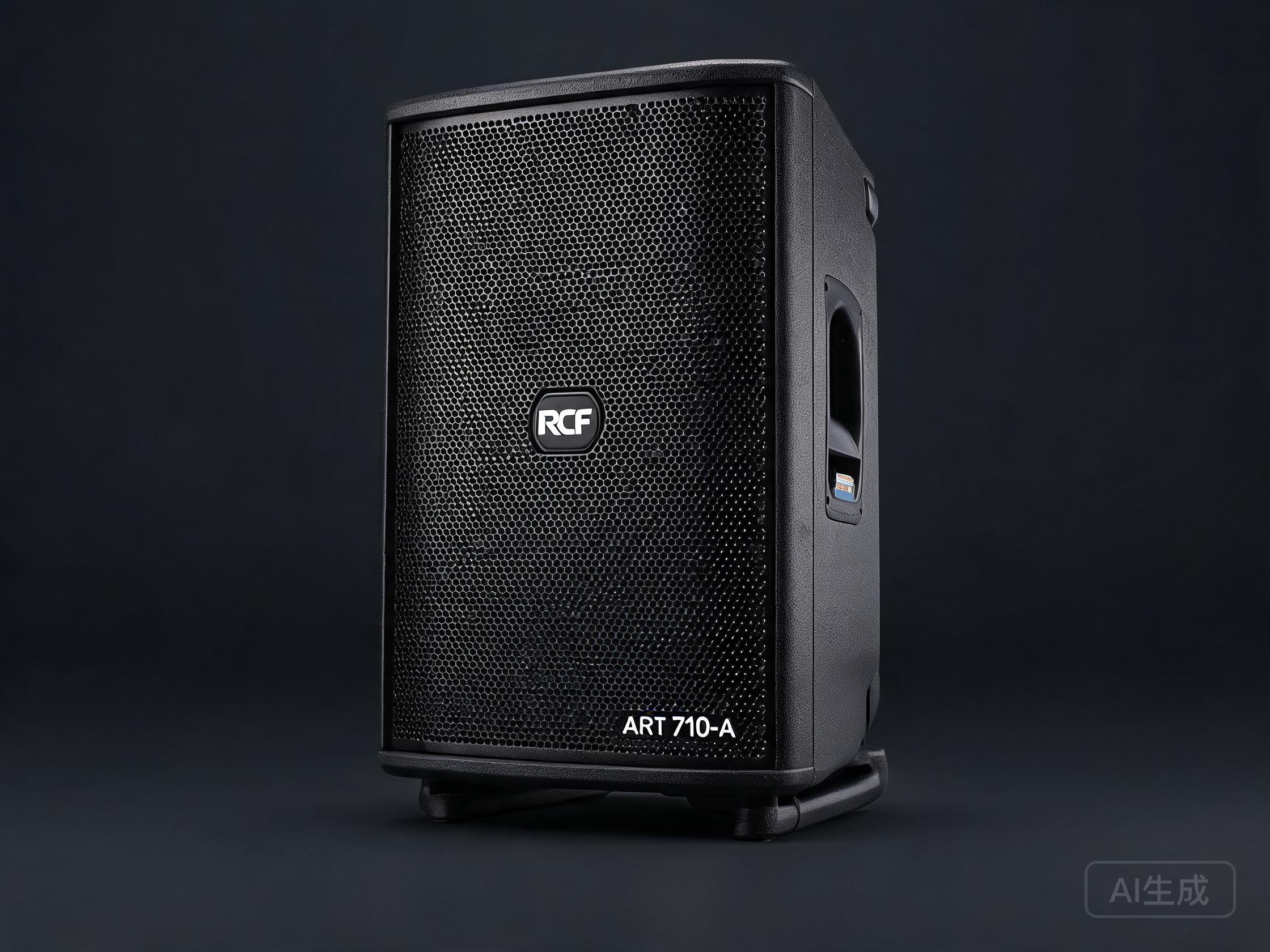
The ART 710-A Mk4 is the smallest full-range box in RCF's ART 7 series: a two-way active speaker with a 10-inch woofer and a 1-inch compression driver on a waveguide, driven by onboard Class-D amplification. It is a plastic-enclosure, pole-mount, monitor-angle cabinet designed to be carried by one person and deployed fast.
This particular listing is a single unit in Grade A condition, priced at $620 USD FOB. It is not a new box and it is not a collector's item — it is a working tool.
Typical owners of this model are:
- Mobile DJs and small bands that need a main or monitor that fits in a car boot
- AV integrators specifying fill, delay or breakout speakers
- Rental companies that already run ART-series stock and want spares that match
- Venues using it for speech, playback and light live music in rooms up to roughly 100–150 people
It is a good fit where you need clean mid-band output and controlled coverage, not sub-bass. If you are expecting a 12- or 15-inch box's low end, this is the wrong cabinet.
Key specifications explained
Active 2-way. The amplifier, crossover and limiting are inside the cabinet. You feed it a line-level signal and mains power; there is no external amp rack, no passive crossover to match, and no way to accidentally drive it with the wrong amplifier. That is the main practical advantage of this format for rental and install work.
1400W (peak) Class-D. RCF rates this figure as peak power, which is a marketing-standard number rather than a continuous thermal rating. Read it as "this box has enough amplifier headroom for its driver complement" rather than as a literal 1400 watts of sustained output. In practice the limiter engages well before you reach the thermal limit, which is why the box stays clean at high levels.
131 dB max SPL. This is a maximum, measured at 1 m under specified conditions, and it is the number that actually matters for booking decisions. For a 10-inch two-way, 131 dB is a genuinely useful figure: it covers speech and mid-forward music in a small-to-mid room, and it works as a monitor where the performer is 1–2 m away. It does not mean the box will hold 131 dB across the whole low-frequency band — that is physically impossible at this driver size.
10-inch woofer. The direct consequence is limited output below roughly 60–70 Hz. You get punch and vocal intelligibility, not chest-thump. Plan on a subwoofer for anything bass-driven.
Pole mount and monitor angle. Standard 35 mm pole socket plus a shaped side for floor-monitor use. This dual-purpose design is why the model shows up in so many small rental inventories.
Real condition and what our grading means
Grade A, in our system, means the unit is fully functional and cosmetically clean for a used cabinet: no structural damage to the enclosure, grille intact, drivers original and undamaged, all controls and connectors working, and it has passed our functional test before listing. It does not mean "as new" — a Grade A used speaker can still show light scuffs on the paint, minor marks around the pole socket, or faint handling wear on the grille. Those are normal for a box that has been gigged.
For this specific listing, the practical reading is: you can put it straight into service. What we cannot tell you from a grading label alone is how hard the unit was driven by its previous owner, so the checks below are worth doing on arrival regardless of grade.
One note on buying a single unit: matching an existing pair matters. If you already own ART 710-A Mk4 boxes, a same-model spare is straightforward. If you are buying your first one, remember you are buying one cabinet, not a system — you will need a second for stereo, or a subwoofer and a second box for a small PA.
Common problems to check on this model when buying used
These are the generic wear points on ART-series active cabinets. Check them on any used unit, including this one:
- Amplifier module and thermal behaviour. Run the box at moderate level for 20–30 minutes and listen for the fan, and check that it does not shut down or drop level unexpectedly. Class-D modules with dried thermal paste or blocked vents are a known service item on any brand.
- Input board and controls. Exercise the volume knob and any EQ switches through their full range. Scratchy pots and intermittent XLR/TRS jacks are the most common electrical faults on used active speakers.
- Driver condition. Listen for buzz, rattle or a dry, rasping top end that suggests a tired compression driver diaphragm. Push the woofer cone gently by hand (power off) and check for scraping.
- Cabinet and grille. Look for cracks around the pole socket and handle mounts, which take the most stress. A bent or pushed-in grille can mean the driver behind it was struck.
- Mains cable and IEC inlet. Check for a loose inlet and a frayed cable; these are cheap to fix but easy to miss.
- Rubber feet and monitor angle. Missing feet make the cabinet unstable on a monitor wedge or a shelf.
None of these are model-specific defects — they are the normal consequences of moving a powered speaker in and out of vans.
Who should buy it / who should look elsewhere
Buy this if: you need a reliable, light, self-powered 10-inch box for speech, playback, DJ monitors or small live use; you already run ART-series stock and want a matching spare; or you want RCF build quality at used pricing rather than new.
Look elsewhere if: you need sub-bass from a single cabinet, you are covering a room larger than roughly 150 people with one box, or you need a stereo pair and only want to buy once. In those cases a 12- or 15-inch model, or a 10-inch plus subwoofer combination, will serve you better.
At $620 FOB for a Grade A unit, the value case rests on condition and on whether the model matches your existing inventory. Acoustrade stocks used active speakers, passive cabinets, subwoofers and related KTV and pro-audio equipment, so if this unit is not the right size for your room, it is worth comparing it against the rest of the category before committing.