What this unit is and who it suits
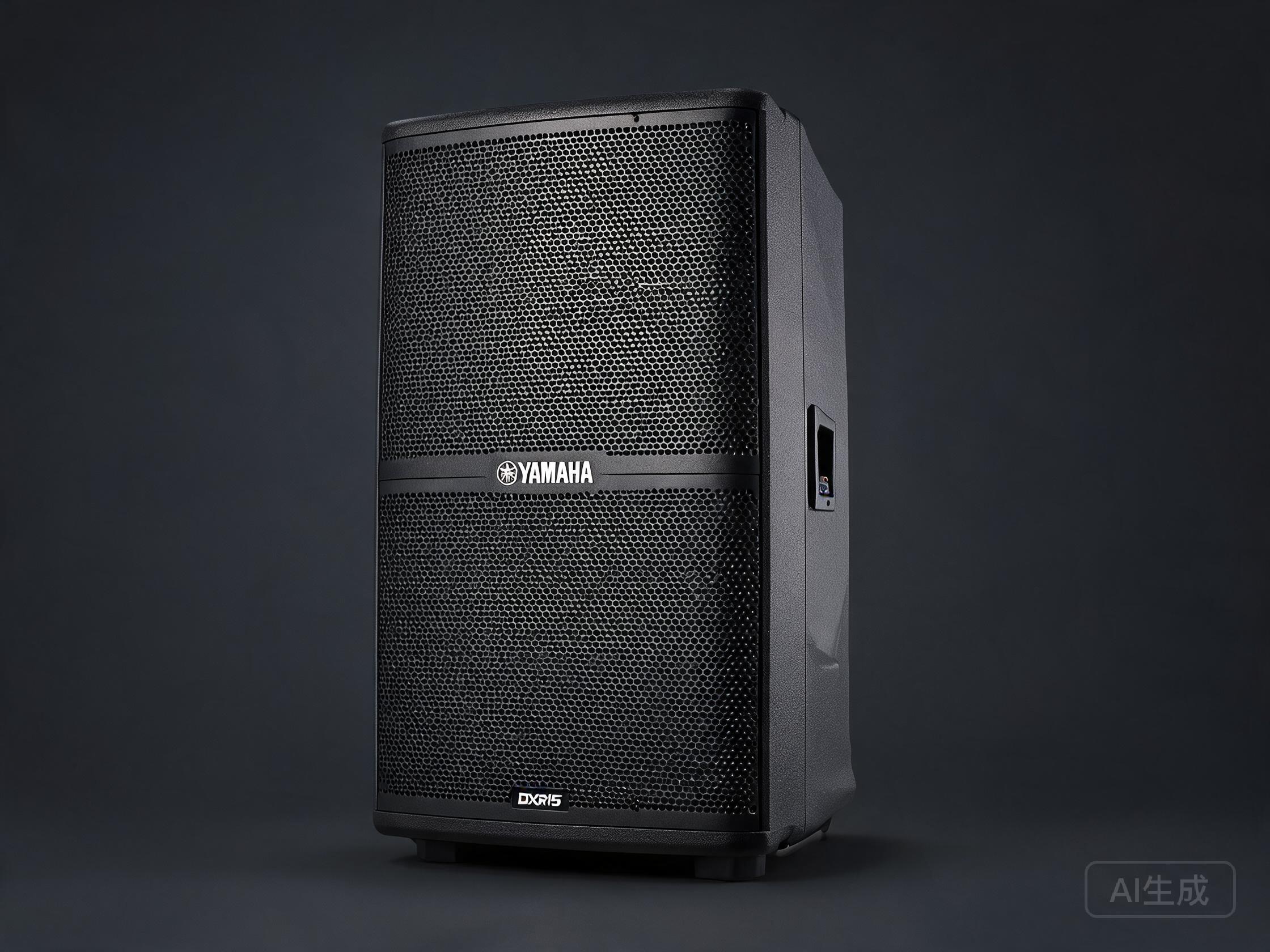
The Yamaha DXR15 is a 15-inch, two-way active loudspeaker from Yamaha's DXR series — a line that has been a workhorse in rental fleets, clubs, conference rooms and mobile DJ rigs for years. This particular listing is a single unit in condition A, priced at $480 USD FOB, with the factory 1100W Class D amplifier module and a rated 132 dB peak SPL.
It is a full-range box, not a subwoofer and not a line-array element. In practical terms it suits:
- Small and mid-size venues that need a main speaker covering speech and music without a separate sub for light program material.
- Rental companies that already run DXR-series inventory and want a matching spare or an additional unit for a package.
- AV integrators fitting a hall, gym, house of worship or conference room where a single powered box on a pole or bracket is enough.
- Mobile DJs and small live acts using one or two tops over a sub.
It is not the right tool for large-scale touring, deep sub-bass reproduction on its own, or anything requiring networked DSP and remote control.
Key specifications explained
Active 2-way, 1100W Class D. The amplifier is built into the cabinet, so there is no separate amp rack, no speaker cable runs and no passive crossover to match. The 1100W figure is the peak rating of the Class D module driving the 15-inch woofer and the HF driver through the internal crossover. In real use, what matters is not the marketing wattage but the fact that the box is self-powered, self-limited and can be fed directly from a mixer or a console output.
132 dB peak SPL. This is a peak figure measured under Yamaha's own conditions, not a continuous, long-term output number. Treat it as an indication of headroom class rather than a promise. A single DXR15 will comfortably handle a few hundred people for speech and moderate music program. For bass-heavy material at high level, one box alone will run out of low-end before it runs out of midrange.
15-inch woofer. The 15-inch format is the reason this model exists alongside the smaller DXR10 and DXR12. A 15-inch driver moves more air and gives usable output lower down, which means it can carry a small gig without a sub — but it also makes the cabinet heavier and bulkier to move and pole-mount.
Two-way with a horn-loaded HF section. The high-frequency driver sits behind a horn, which is what gives the box its pattern control and its ability to throw intelligible speech to the back of a room. Coverage is broad enough for a single box on a stand to cover a modest floor, but it is not a wide-dispersion install box.
Inputs and onboard mixing. The DXR15 has combination inputs and a basic onboard mixer section with level control, so a microphone and a line source can be run without an external mixer for simple jobs. This is a real convenience for solo performers and small corporate work.
Real condition and what our grading means for this specific listing
Condition A, in our grading, means the unit is fully functional and presents as clean used equipment: no structural damage to the cabinet, grille intact, drivers original and undamaged, amplifier module working on all inputs, controls free of scratchiness. It is not a new-in-box unit and it is not a collector piece — it is a working speaker that has been used, inspected and tested by our team before listing.
What that means for you as a buyer:
- Expect cosmetic marks consistent with normal use — minor scuffs on the cabinet coating, light wear on the grille, possibly small marks around the handle and pole socket.
- Expect the electronics to be working, but understand that any used Class D module has a service life and replacement modules are a real cost if one fails later.
- Expect the drivers to be original unless we state otherwise. A replaced driver is not automatically bad, but it is information you should have.
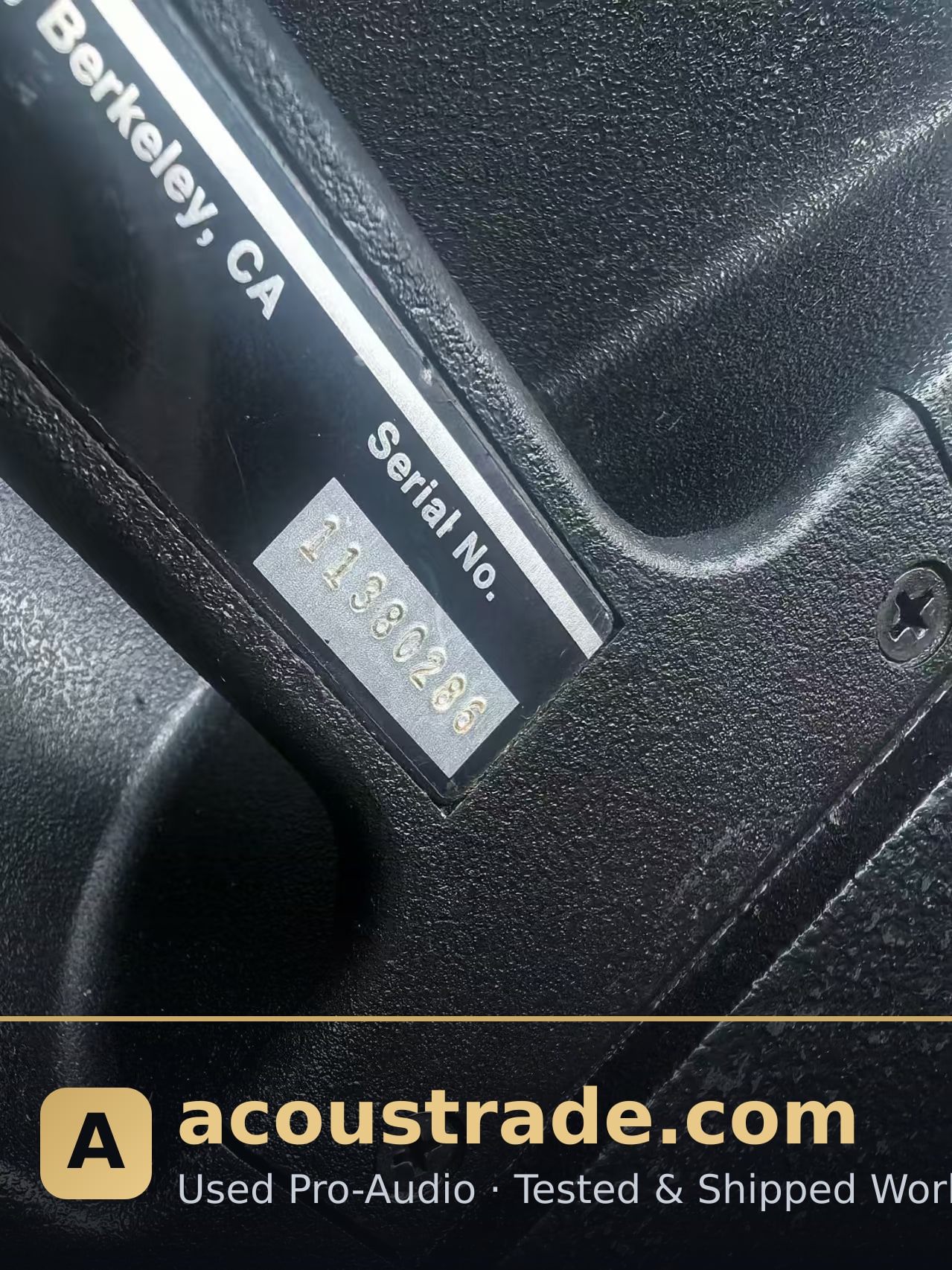
We do not publish invented failure rates or lab data. If you need specific photos of the cabinet corners, the grille, the rear panel or the serial plate before committing, ask — that is a normal request on a used powered box and we treat it as such.
Common problems to check on this model when buying used
Any used powered speaker should be checked the same way, and the DXR15 is no exception. The points below are the ones that matter most on this type of box:
- Amplifier module faults. Listen for hum, hiss or crackle at idle with nothing connected. Check that the unit powers up cleanly, that the protection LED does not stay lit, and that it does not cut out after running for a while at moderate level.
- Input and control wear. Exercise every input, the level control and any switches. Scratchy pots and intermittent jack sockets are common on rental-used gear and are cheap to fix but annoying to discover on site.
- Driver condition. Inspect the woofer cone for tears, creases or signs of over-excursion, and the HF diaphragm for distortion or a dead top end. A blown HF driver is the classic failure on any two-way box that has been driven hard.
- Cabinet and hardware. Check the pole socket for cracking or wobble, the handles for looseness, and the corners for impact damage. Cabinet damage is usually cosmetic, but it can indicate a hard life.
- Grille and internal debris. A dented grille can touch the woofer. Loose screws or rattling hardware show up as buzzes at high level.
- Power and voltage. Confirm the unit is set for your mains voltage and that the IEC inlet and fuse holder are intact.
For a used purchase, ask for a test video at moderate and high level, and confirm the serial number. If you are buying a pair or a full package, ask that they be tested together.
Who should buy it / who should look elsewhere
Buy it if you need a single reliable powered 15-inch top for speech, light music, a small venue or a rental package, and you want a known brand with widely available service and parts. At $480 FOB in condition A, a working DXR15 is a sensible, low-risk addition to a fleet or a fixed install where a single box covers the room.
Look elsewhere if you need deep sub-bass — budget for a subwoofer or choose a different configuration. Look elsewhere if you need networked control, remote DSP or digital snake integration; the DXR series is a straightforward analog-input powered box, and that is both its strength and its limit. And if you are building a large system, buy matched pairs or a full package rather than mixing odd units, because voicing and output matching matter more than saving a few dollars on a single cabinet.
If you are sourcing several units, Acoustrade's used powered speakers and full PA packages are worth comparing against a single-box purchase — buying a matched set usually costs less per box and avoids the mismatch problem entirely.