# Crown DCi 8|600 vs Crown XTi for Nightclubs
Choosing an amplifier for a nightclub is different from choosing one for a touring rack. A club amplifier runs every night, often for eight or more hours, in a hot, dusty, vibration-heavy room, and it usually has to feed several zones rather than one big PA. Two Crown families come up again and again in these conversations: the DCi Series (install-focused, networked) and the XTi Series (touring-oriented, lightweight). This guide compares them for club use and explains where the Crown DCi 8|600 fits.
What each amplifier is designed for
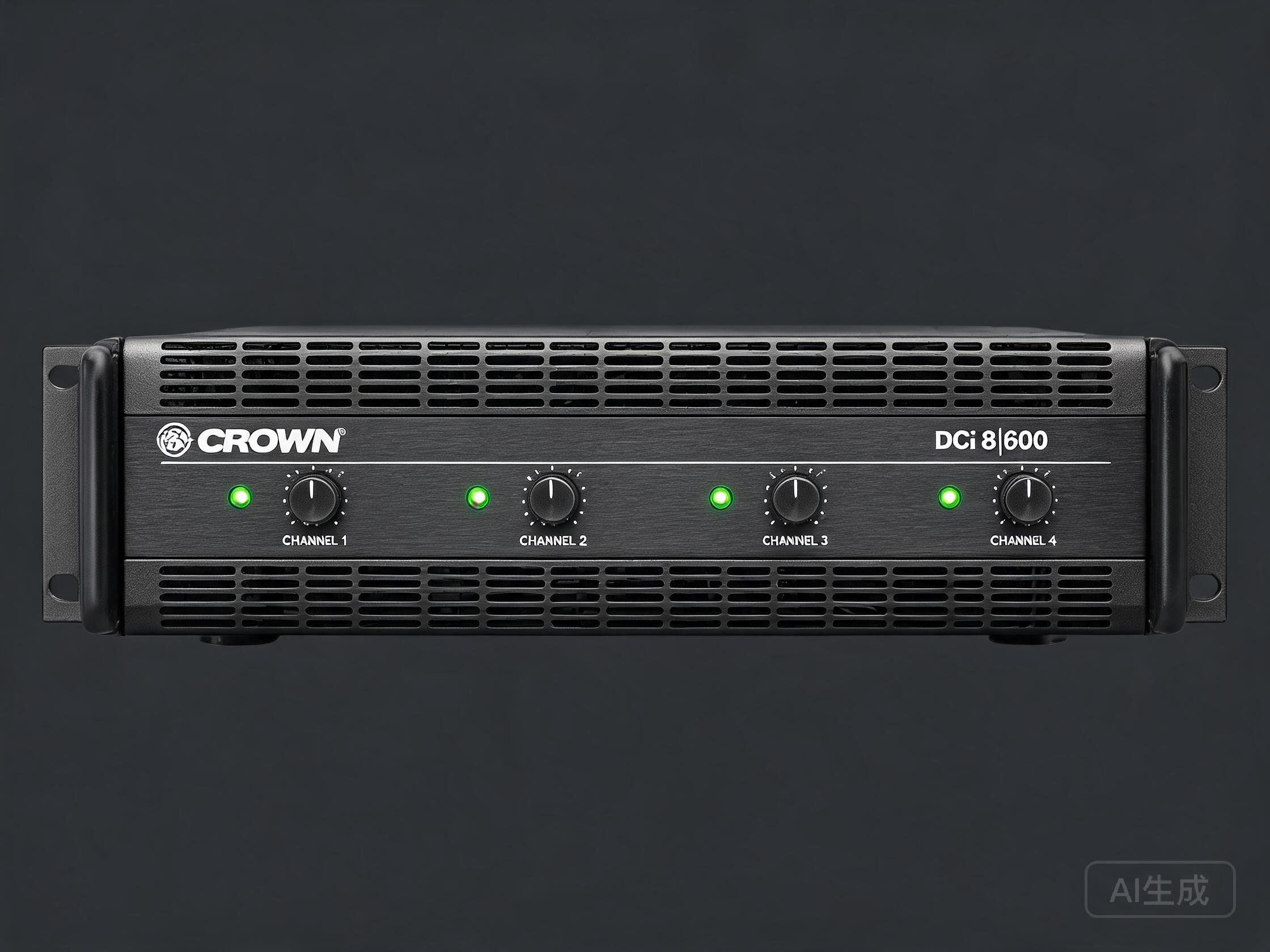
Crown DCi 8|600 is an eight-channel, 600 W-per-channel install amplifier built for fixed systems. It is designed to sit in a rack room and drive multiple zones: main dancefloor speakers, bar and lounge fills, restrooms, VIP areas and outdoor smoking areas. Key traits for clubs:
- Eight independent channels in a compact chassis, so one unit can cover several zones
- Networked control and monitoring, so levels and faults can be checked remotely
- Constant-voltage options (for 70V/100V distributed speakers) as well as low-impedance loads
- Designed for continuous duty in fixed installations
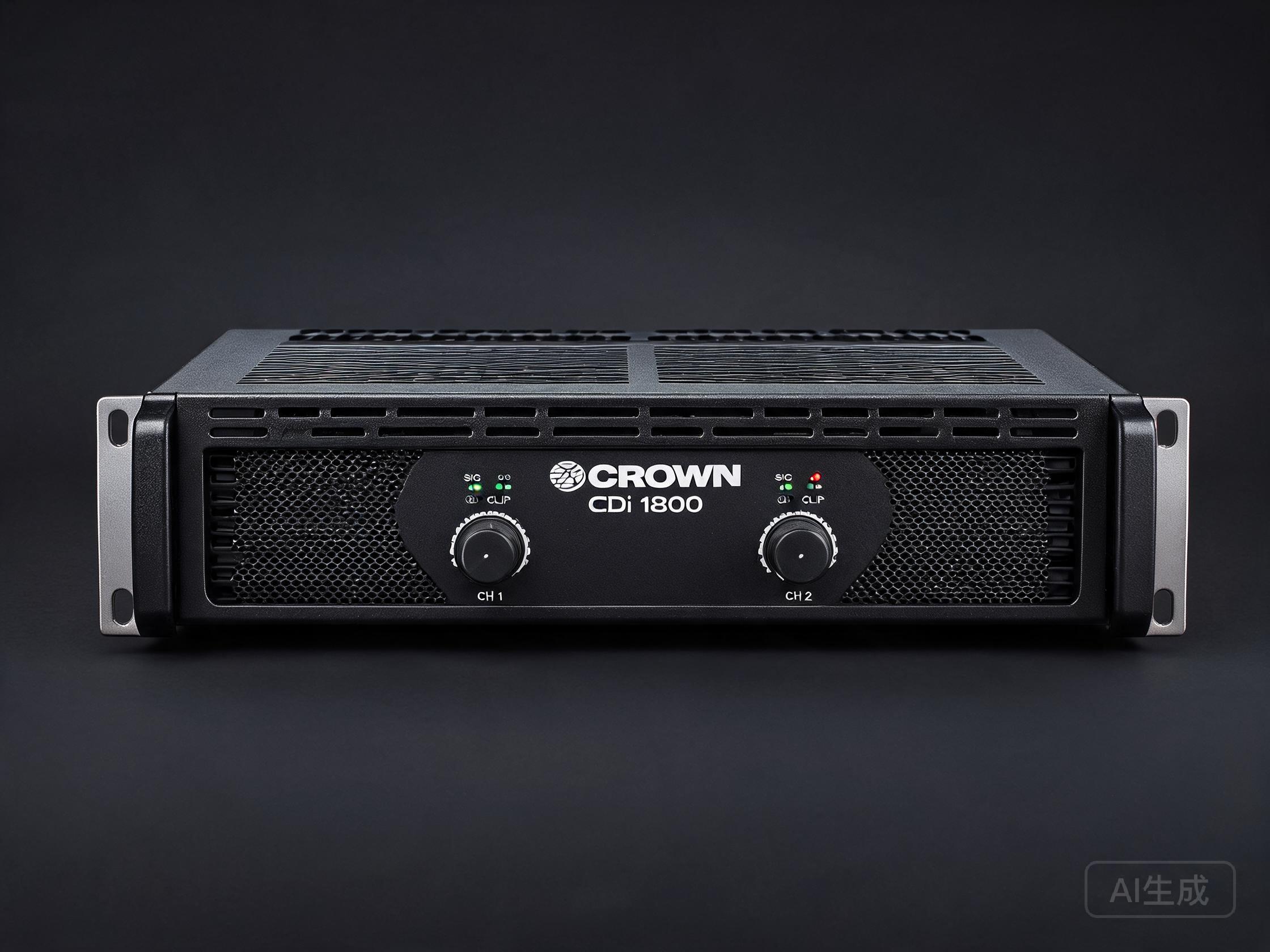
Crown XTi Series is a two-channel touring amplifier family known for light weight, onboard DSP on many models, and strong power in a small box. It is a common choice for mobile rigs, monitor wedges and main PA where you want a lot of power from a single lightweight unit.
Power and channel count in a real club
A nightclub rarely has one listening area. It has a main floor, a bar, a lounge, corridors and sometimes a terrace, each with its own level and content needs.
- If your priority is many zones with moderate power per zone, the DCi 8|600's eight channels do the job of several two-channel amps in one rack space. That simplifies wiring, power distribution and rack layout.
- If your priority is maximum power for a small number of large speakers — a big main dancefloor stack, for example — a two-channel XTi model with higher per-channel output is often the better match.
In practice, many clubs use both ideas: a high-power two-channel amp for the main PA and a multi-channel install amp for fills and secondary zones. The DCi 8|600 is particularly strong in that second role, and can also drive main speakers when the design uses several smaller cabinets rather than one large stack.
Control, DSP and remote monitoring
This is where the two families diverge most for club operators.
- XTi: onboard DSP on many models lets you set crossovers, EQ and limiting at the amplifier, which is useful when the amp travels with the rig. Settings live in the unit.
- DCi 8|600: built around networked control and monitoring in a fixed install. A venue manager or integrator can check channel status, levels and faults without walking the room, which matters when a club runs six or seven nights a week and faults need to be spotted before doors open.
For a club with a dedicated rack room and a maintenance contract, remote monitoring usually saves more time than extra onboard DSP. For a venue that reconfigures its system often, the touring-style flexibility of the XTi may be more convenient.
Reliability, heat and service life in a club
Clubs are hard on amplifiers: high ambient temperature, dust from the floor, vibration from subs, and long continuous run times.
- The DCi 8|600 is built for continuous install duty and is normally racked in a ventilated room away from the dancefloor, which keeps it cooler and cleaner.
- XTi amplifiers are also robust, but in touring use they live in road cases and move regularly; in a fixed club rack they work well too, provided airflow is maintained.
Whichever you choose, plan rack ventilation, keep filters clean and leave headroom. An amplifier run near its limit every night will not last as long as one running comfortably below it.
Buying used: what to check on either model
Acoustrade supplies tested used pro-audio equipment, and both Crown families appear regularly in the second-hand market. When buying used:
- Confirm the exact model and channel configuration — DCi and XTi names cover many variants
- Ask for a test report showing every channel working at load, not just a power-on check
- Check fan behaviour and listen for excessive noise at idle
- For networked DCi units, confirm the network interface is functional
- Inspect rear connectors and binding posts for damage or corrosion
- Confirm the firmware/control software situation for the specific unit
A tested used DCi 8|600 can be an economical way to build a multi-zone club system, especially when paired with tested used power amplifiers, loudspeakers and line arrays from the same supply chain.
Which should you choose?
- Choose the Crown DCi 8|600 if your club has multiple zones, a fixed rack room, and you want remote monitoring and simpler rack wiring.
- Choose a Crown XTi if your priority is high power in one or two channels, lightweight touring flexibility, or onboard DSP at the amplifier.
- Choose both if you have a demanding main dancefloor plus several fill zones — a common and sensible club architecture.
FAQ
Is the Crown DCi 8|600 loud enough for a nightclub main dancefloor?
It depends on the speakers and the size of the room. With 600 W per channel across eight channels, it can drive multiple cabinets or zones well, but a very large main stack may need a higher-power two-channel amplifier. A system designer should match amplifier power to speaker handling and target SPL.
Can I use a Crown XTi in a fixed club install?
Yes. XTi amplifiers work in fixed installations. They are simply designed with touring in mind, so remote monitoring and multi-zone channel count are more limited than on the DCi 8|600.
Does the DCi 8|600 support 70V/100V distributed speakers?
DCi Series amplifiers are commonly used with constant-voltage distributed systems as well as low-impedance loads. Confirm the exact configuration of the specific unit you are buying.
Is used Crown equipment reliable for a club?
Tested used units from a reputable supplier can be very reliable and cost-effective. Ask for per-channel test results and check fans, connectors and network functions before purchase.
What else do I need for a complete club system?
Amplifiers, speakers, subwoofers, a mixer or processor, microphones and cabling. Acoustrade supplies tested used versions of each category, so you can build a consistent system from one source.