Quick verdict
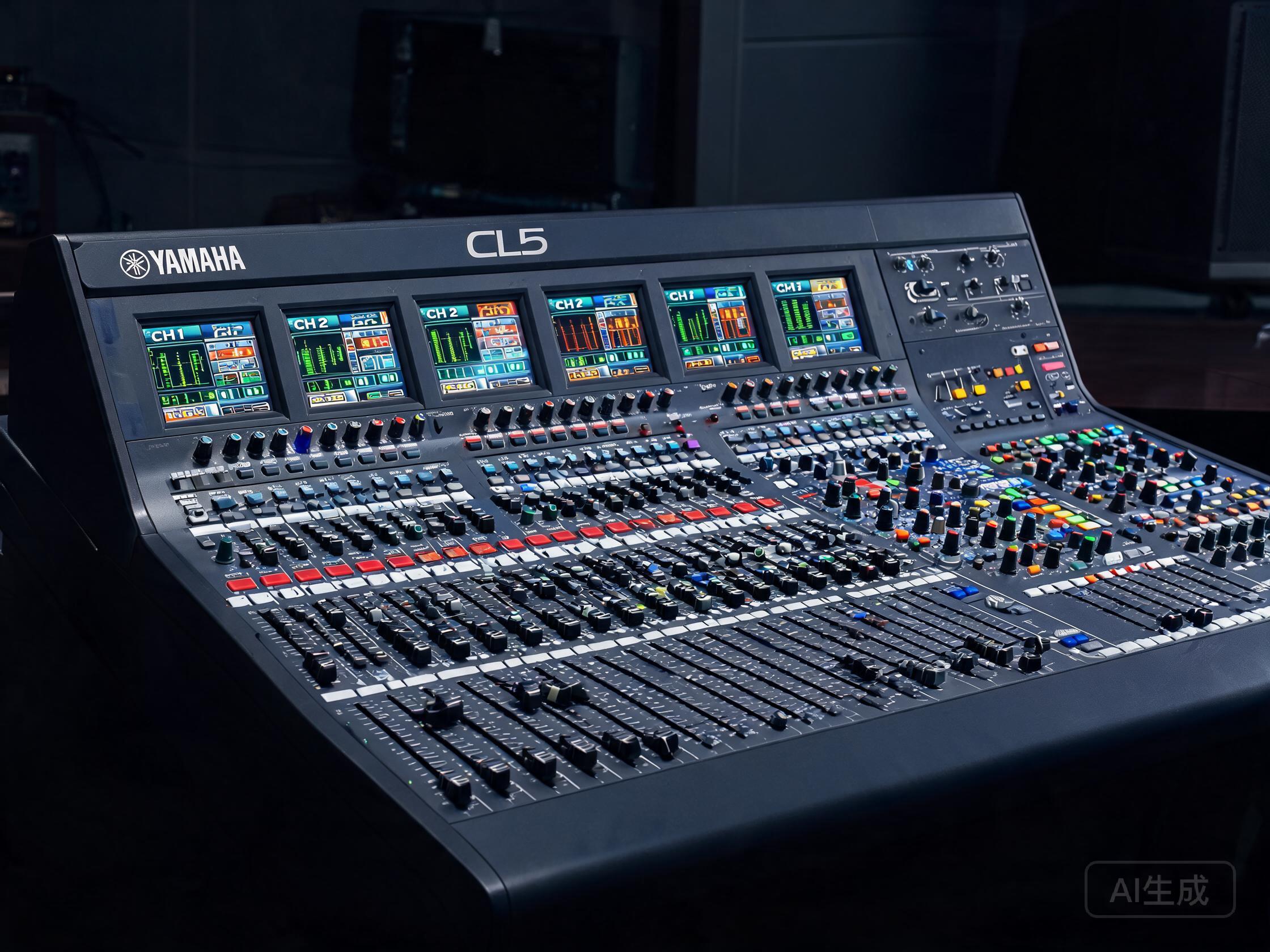
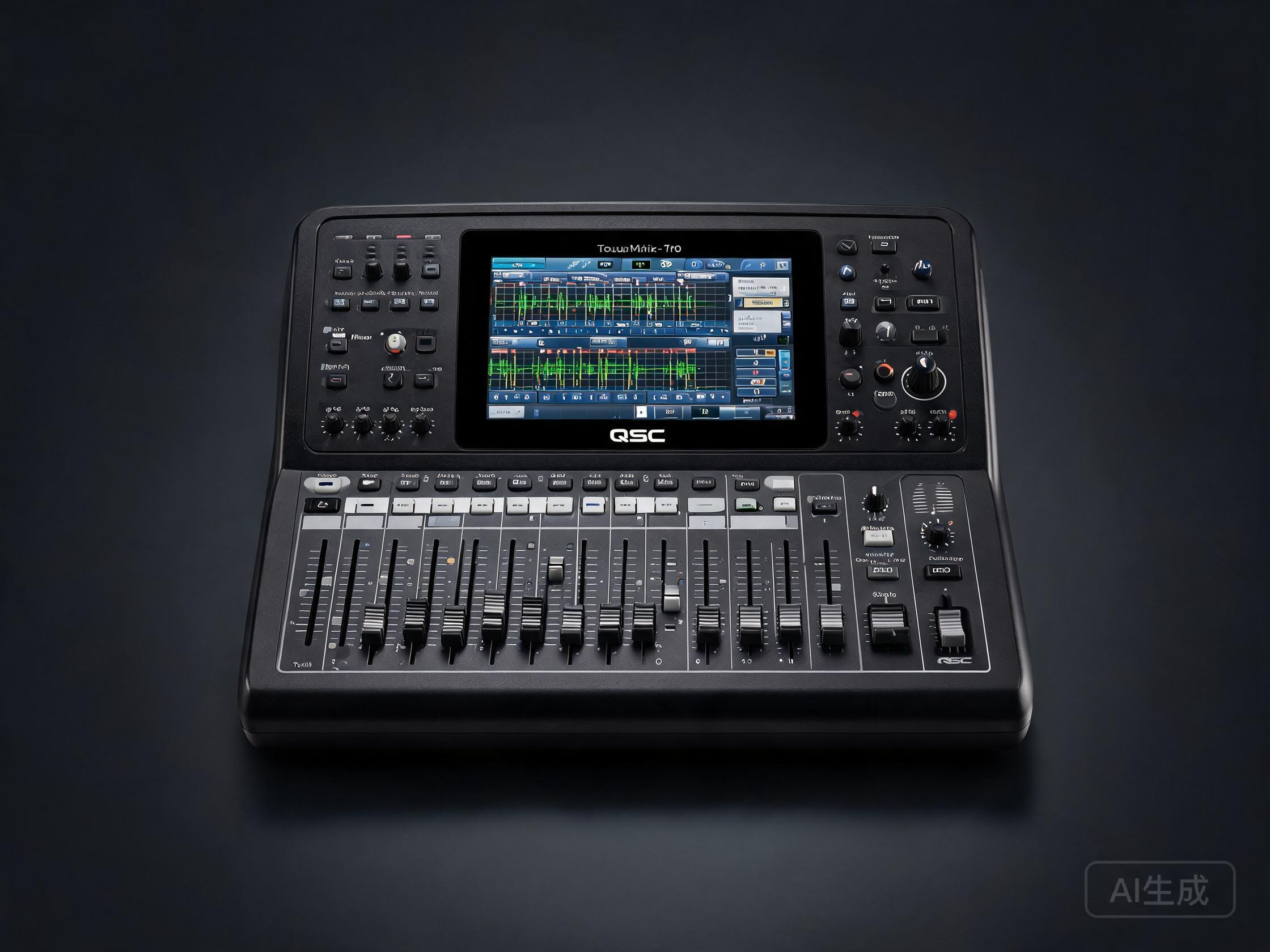
If you are equipping a fixed install with a real front-of-house position — a mid-size hall, a club main stage or a rental inventory that gets rider-checked — buy the Yamaha CL5. If you need a compact, self-contained mixer for a small venue, a conference room, a bar stage or a mobile DJ/corporate kit, buy the QSC TouchMix-16 Pro. These are not competitors; they are two different tiers of tool, and the price gap reflects that honestly.
Specifications compared
| Parameter | Yamaha CL5 | QSC TouchMix-16 Pro |
|---|---|---|
| Condition | B (used, cosmetic/functional wear) | A (used, close to new) |
| FOB price | $3,200 USD | $1,250 USD |
| Mix channels | 72 inputs / 32 outputs | 22 channels, 16 mic preamps |
| Preamps | D-PRE | Not specified by the manufacturer in this listing |
| Resolution / sample rate | 96 kHz / 24-bit | Not specified in this listing |
| Effects | Not specified in this listing | Built-in FX + compressor |
| Control surface | Full physical console (faders, encoders) | Touchscreen, iOS / Android / USB control |
| Format | Modular console + stage box architecture | Standalone compact mixer |
Two honest caveats. First, the CL5's effect rack and the TouchMix's converter resolution are simply not in the data we hold — treat those cells as unknown rather than as a weakness. Second, the CL5's 72/32 figure describes the console's mix capacity; the physical input count depends on which Rio stage boxes you pair with it, and those are a separate purchase.
Power / performance in practice
The CL5 is a 96 kHz console with D-PRE preamps and a full physical control surface. In practice that means a monitor engineer can ride a wedge mix with their hands while a FOH engineer works the same desk, scene recall is fast and repeatable, and channel count stops being a constraint the moment you add a second stage box. It is a desk built for shows where the band changes every night and the patch has to be rebuilt in twenty minutes.
The TouchMix-16 Pro is a different discipline. Sixteen mic preamps and 22 channels cover a four-piece band, a corporate panel or a house-of-worship service with room to spare. Built-in FX and compression mean no outboard rack. iOS and Android control means the operator can walk the room during soundcheck and tune the system from the audience position — genuinely useful in a small room where the mix position is a compromise. What it does not have is a fader per channel, and it will not absorb a 40-input festival patch.
Condition, serviceability and spare parts
This is where the two diverge most, and it is worth reading carefully.
The TouchMix-16 Pro is graded A — the cleaner of the two units. It is also the harder one to repair economically. Compact digital mixers are dense boards; when a touchscreen or a surface-mount component fails, the practical answer is often a replacement unit rather than a bench repair. That is acceptable at a $1,250 entry price, but budget for it.
The CL5 is graded B, so expect cosmetic marks and possibly worn fader caps or a tired encoder — normal for a console that has toured. The trade-off is that it is a professional, modular, serviceable platform: fader boards, PSUs and stage-box components are the kind of parts that exist in the professional spares chain, and a console of this class is designed to be opened and maintained. For a venue that intends to run the desk for five years, grade B on a serviceable platform usually beats grade A on a sealed one.
Buy spares before you need them: at minimum a spare PSU and a spare fader or two for the CL5.
Price and total cost of ownership
The headline numbers are $3,200 versus $1,250 — a 2.6× difference. That gap is real, but it is not the whole bill.
The CL5 needs stage boxes and a network to be useful. A Rio rack, the cabling and a case can easily approach or exceed the console's own price, so a working CL5 system is a $6,000–$8,000 proposition, not $3,200. In exchange you get a console that holds its professional value, is rider-acceptable, and can be expanded rather than replaced.
The TouchMix-16 Pro is close to plug-and-play: mixer, a tablet you already own, and you are working. No stage box, no network, minimal case. Its running costs are low until something breaks inside, at which point the repair-or-replace calculation is simple.
Also weigh resale. A B-grade CL5 in a known professional line will still find buyers in several years. A compact mixer in this class typically depreciates toward its utility value and stays there.
Final recommendation
Match the mixer to the job, not to the price tag.
Choose the Yamaha CL5 if you run a fixed venue with a proper FOH position, if your shows arrive with input lists longer than 22 channels, or if you are building a rental inventory that clients will recognise. Accept grade B, budget for stage boxes and spares, and treat it as a long-term asset.
Choose the QSC TouchMix-16 Pro if your reality is sixteen mics or fewer, one operator, and a room where you cannot afford a separate control room. Grade A at $1,250 is a sensible entry into digital mixing, and the touchscreen workflow will be learned in an afternoon.
If you are genuinely torn, buy the TouchMix first and the CL5 when a show forces your hand. Acoustrade stocks both classes of used console, along with the stage boxes, cases and spares that make either one a working system — worth checking before you commit to a purchase order.