Introduction
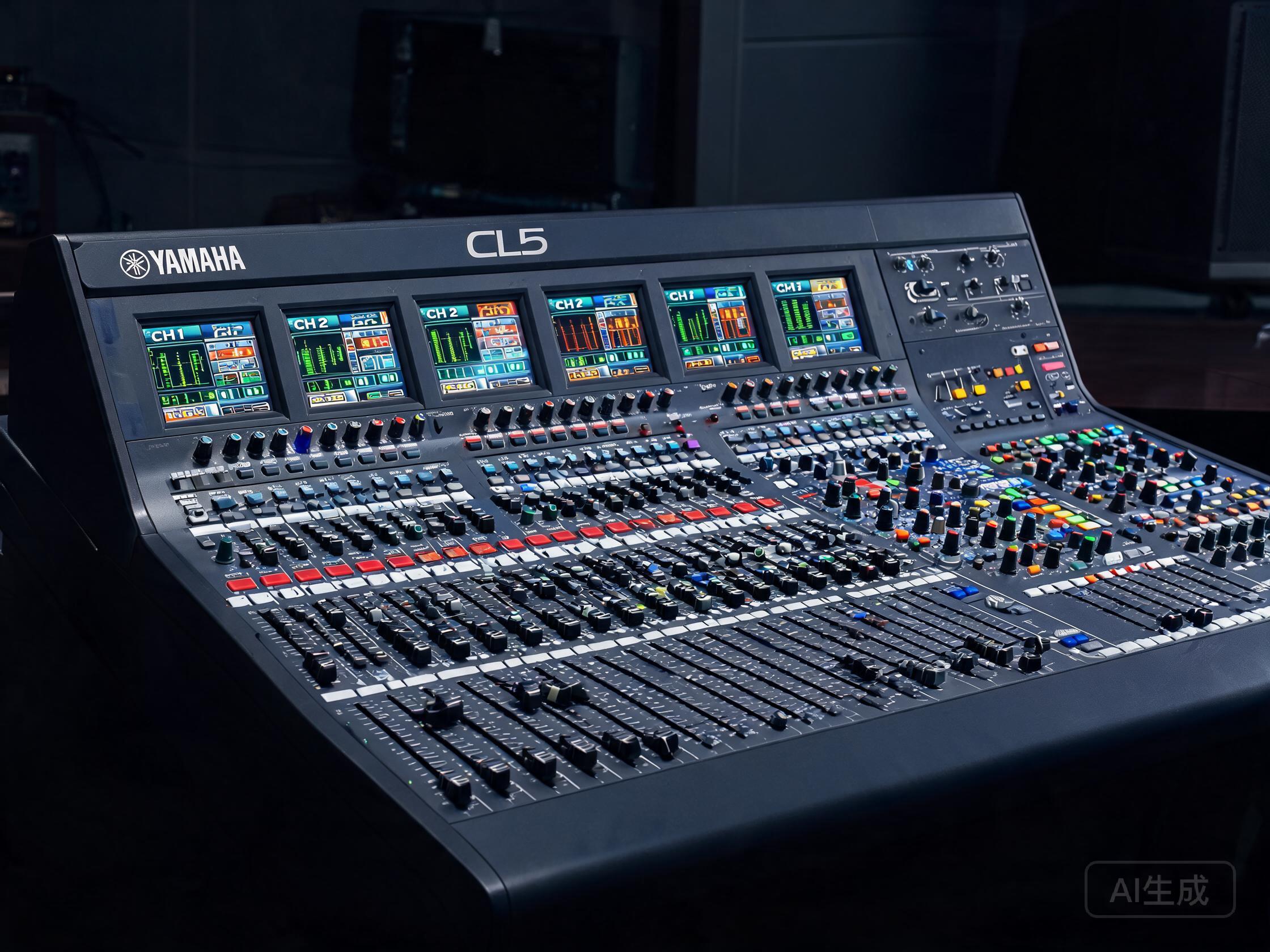
When it comes to professional digital mixing consoles, the Yamaha CL5 has earned a reputation as a reliable workhorse for live sound, broadcast, and installed audio systems. Released as part of the CL series, it combines Yamaha's legendary reliability with advanced features that cater to both touring engineers and fixed installations. This review breaks down the Yamaha CL5 specs, its typical use cases, and why it remains a sought-after model on the second-hand market.
Key Specifications at a Glance
The Yamaha CL5 is a digital audio mixing console with a modular design. Here are the core specs:
- Fader Configuration: 72 input channels, 24 mix buses, 8 matrix buses, and 16 DCAs.
- Local I/O: 8 XLR inputs, 8 XLR outputs, and 2 AES/EBU outputs.
- Expansion: Supports up to 3 Rio I/O racks via Dante network, allowing for remote stage boxes.
- Processing: 48-bit internal processing, 24-bit/96kHz sampling rate.
- Display: Two large touchscreens for intuitive control.
- Dimensions: Approximately 1,050mm x 300mm x 700mm, weighing around 40kg.
- Power: Standard AC power with redundant option.
These specs make the CL5 suitable for medium to large venues, houses of worship, and touring applications.
Performance and Sound Quality
The CL5 is built on Yamaha's proprietary VCM (Virtual Circuitry Modeling) technology, which emulates classic analog compressors, EQs, and effects. This gives engineers access to warm, musical processing without external gear. The console's preamps are clean and transparent, providing ample headroom for dynamic performances.
One standout feature is the Dante audio networking, which allows for seamless integration with other Dante-enabled devices. This reduces cabling complexity and enables flexible routing. The CL5 also offers a Portico 5033 EQ and Portico 5043 compressor as optional plugins, adding high-end studio-grade processing.
In live settings, the CL5's latency is negligible, and its stability is proven night after night. The dual touchscreens are responsive, and the user interface is logical, making it easy to navigate even under pressure.
Typical Use Cases
The Yamaha CL5 excels in various professional audio environments:
- Live Concerts and Tours: Its robust build and Dante integration make it ideal for touring bands and rental companies.
- Houses of Worship: The CL5's intuitive operation and recallable presets simplify weekly services.
- Broadcast Studios: With its reliable performance and redundant power supply option, it's a staple in broadcast environments.
- KTV and Entertainment Venues: In high-end KTV settings, the CL5 provides precise control over vocals and effects, enhancing the overall experience.
For KTV venues, the CL5 can manage multiple microphone inputs and apply vocal effects, ensuring consistent sound quality across rooms. Its ability to store and recall settings per room or event is a major time-saver.
Why Buyers Choose the Yamaha CL5
Even with newer models on the market, the CL5 remains popular for several reasons:
- Proven Reliability: Yamaha consoles are known for their durability, and the CL5 is no exception. Many units have been in service for years without major issues.
- Cost-Effective: On the second-hand market, the CL5 offers flagship-level features at a fraction of the original price. This makes it attractive for venues with budget constraints.
- Ecosystem: The CL series shares many accessories and expansion cards with other Yamaha consoles, simplifying upgrades and repairs.
- Sound Quality: The VCM processing and Dante networking ensure that the CL5 still holds up against modern competitors.
At Acoustrade, we supply tested used Yamaha CL5 consoles that are thoroughly inspected and refurbished to ensure reliable performance. Whether you're equipping a new venue or upgrading an existing system, a used CL5 can be a smart investment.
FAQ
What is the difference between the Yamaha CL5 and CL3?
The CL5 has more faders and a larger physical control surface compared to the CL3. The CL5 offers 72 input channels, while the CL3 has 64. The CL5 also includes more local I/O and a larger screen real estate.
Can the Yamaha CL5 be used for studio recording?
Yes, the CL5 can be used in studio settings, especially with its Dante integration and high-quality preamps. However, it is primarily designed for live sound and installed applications.
Is the Yamaha CL5 still supported by Yamaha?
Yamaha continues to provide firmware updates and support for the CL series, although the focus has shifted to newer models. Many parts and service are still available through authorized service centers.
What is the typical price of a used Yamaha CL5?
Prices vary based on condition and included accessories. Generally, a used CL5 can range from $8,000 to $15,000. Acoustrade offers competitive pricing on tested units.
Does the Yamaha CL5 require external I/O racks?
The CL5 has built-in local I/O, but for larger setups, you can connect up to three Rio racks via Dante to expand input and output capabilities.
Conclusion
The Yamaha CL5 is a versatile and reliable digital mixer that continues to deliver professional-grade performance. Its specs, including Dante networking and VCM processing, make it a valuable asset for live sound, broadcast, and KTV venues. If you're in the market for a used CL5, Acoustrade provides tested and certified units to help you get the most out of your investment.