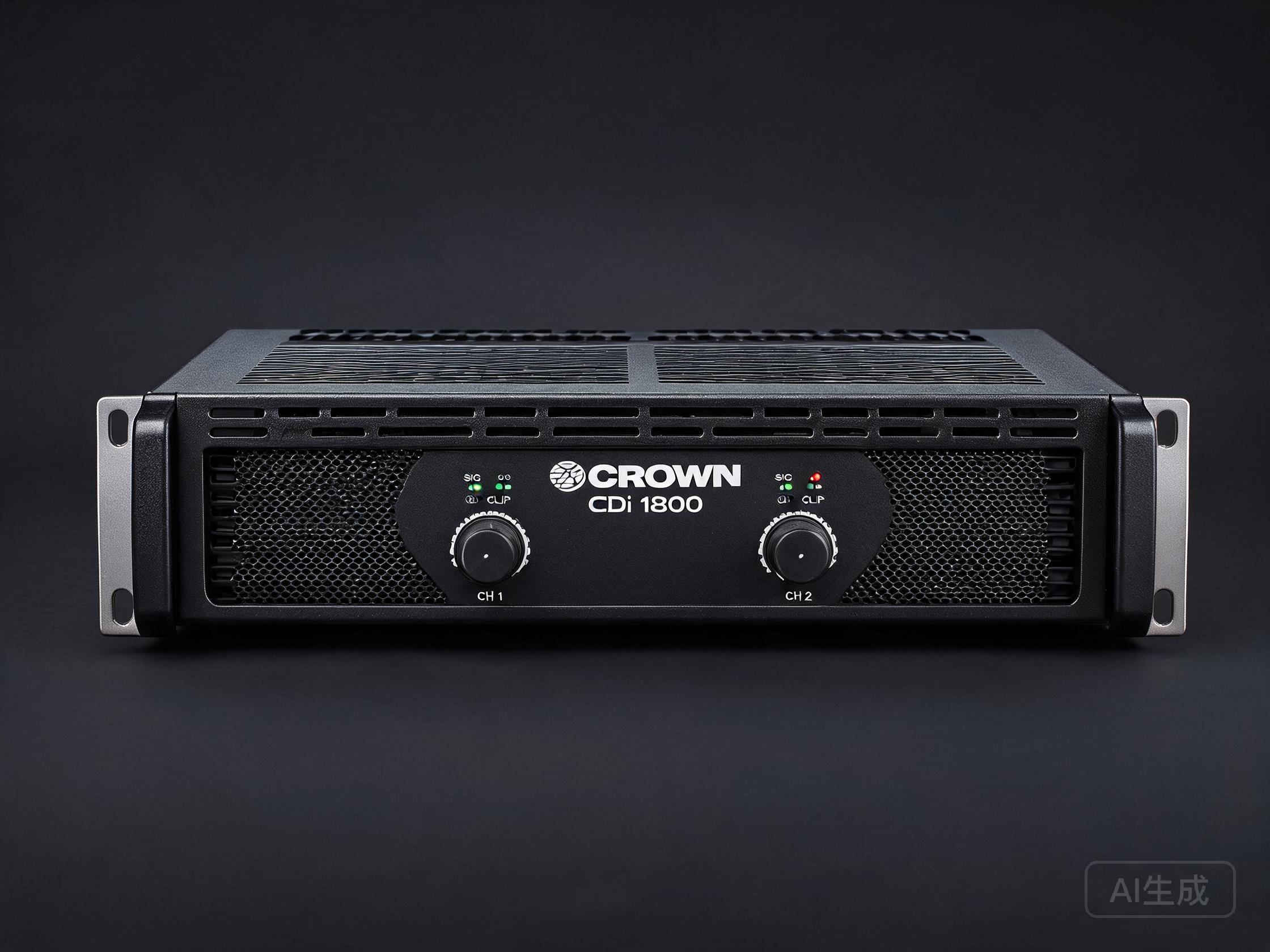
What a Refurbished Audio Amplifier Actually Means
A refurbished audio amplifier is a used professional power amplifier that has been inspected, repaired where needed, and tested again before resale. It is not the same as a broken unit sold "as is", and it is not the same as a brand-new amplifier. It sits in between: real working hardware, sold at a lower price, with a known condition.
For a bar, club, KTV room, restaurant, or house of worship, this matters because amplifiers are one of the least glamorous but most critical parts of a sound system. When one fails on a Friday night, the whole room goes quiet.
What the Refurbishment Process Should Include
Good refurbishment is a checklist, not a wipe-down. When you buy from a specialist supplier, you should be able to ask what was actually done. A credible process usually covers:
- Visual inspection of the chassis, connectors, and PCB for heat damage, corrosion, or previous repairs.
- Power-up and idle test to confirm the unit powers on and holds stable bias.
- Load testing on a dummy load or real speakers at working volume, checking both channels.
- Thermal check under sustained load to see whether fans and heatsinks do their job.
- Protection circuit test — does the amp shut down correctly on short circuit or overheating?
- Cleaning and replacement of worn parts such as fans, filter capacitors, or input jacks where needed.
If a seller cannot describe this process, treat the amplifier as untested used gear, not refurbished.
Why Venues and Integrators Buy Refurbished Amplifiers
Professional amplifiers from brands like Crown, QSC, Lab.gruppen, Powersoft, and similar are built to last decades. Many units pulled from service still have most of their working life ahead of them. That is the core reason the refurbished market exists.
The practical advantages:
- Lower cost per channel. You can often power a full room for the price of one new flagship amplifier.
- Proven models. Older amplifier lines are well documented, and spare parts and schematics are easier to find.
- Faster scaling. Integrators fitting out multiple KTV rooms or a multi-zone venue can standardise on one tested model instead of mixing new stock.
- Lower risk than raw used gear. A tested unit removes most of the guesswork.
The trade-offs are real too: no factory warranty in most cases, cosmetic wear, and the need to match impedance and power correctly to your speakers.
How to Match a Refurbished Amplifier to Your Speakers
This is where most buyers get it wrong. A refurbished amplifier still has to fit the system.
- Check power at the right impedance. An amp rated 2 x 800 W at 4 ohms is not the same as 2 x 800 W at 8 ohms.
- Leave headroom. Aim for amplifier power roughly 1.5 to 2 times the speaker's continuous rating for clean headroom, unless the manufacturer advises otherwise.
- Match the application. Subwoofers want high-current, bridgeable amps. KTV and vocal rooms want clean midrange and reliable protection circuits.
- Check the connectors. Speakon, binding post, or terminal block — make sure it matches your cabling.
- Confirm voltage. 230 V for Europe and most of Asia, 110–120 V for North America.
If you are also refreshing the rest of the signal chain, Acoustrade stocks used mixers, loudspeakers, and microphones that pair with these amplifiers.
Buying Checklist Before You Pay
- Ask for the test report, not just photos.
- Confirm what was replaced and what was left original.
- Ask about return policy and DOA (dead on arrival) terms.
- Request photos of the actual unit, including rear panel and serial number.
- Confirm shipping method and packing — amplifiers are heavy and easily damaged in transit.
- For multi-room projects, ask whether matched batches are available.
FAQ
Is a refurbished amplifier as good as new?
Not identical, but for professional use it can be equally reliable. A properly refurbished amplifier has been tested under load, which many new units are not individually. The main difference is warranty and cosmetics, not core performance.
How long should a refurbished pro amplifier last?
It depends on the model and how hard it is driven. Many touring-grade amplifiers run for 10–20 years with normal maintenance. Ask the seller about capacitor age and fan condition, as these are the usual wear points.
Can I use a refurbished amplifier for KTV rooms?
Yes. KTV rooms are actually a good fit because the duty cycle is predictable and the power requirements are moderate. Choose a model with solid thermal protection, since KTV rooms are often small and warm.
What should I check when the amplifier arrives?
Inspect the box for impact damage, photograph everything before opening if it looks damaged, then power up with no load, check both channels, and run it at moderate volume for 30–60 minutes while listening for distortion or unusual fan noise.
Do refurbished amplifiers come with a warranty?
It varies by supplier. Some offer a short functional warranty, often 30–90 days. Always confirm this in writing before purchase, and clarify who pays return shipping if a fault appears.