What to look for before you buy (the 5 checks that matter)
When sourcing used power amplifiers in bulk, you need to look beyond the spec sheet. Here are the five checks that separate a reliable purchase from a costly mistake.
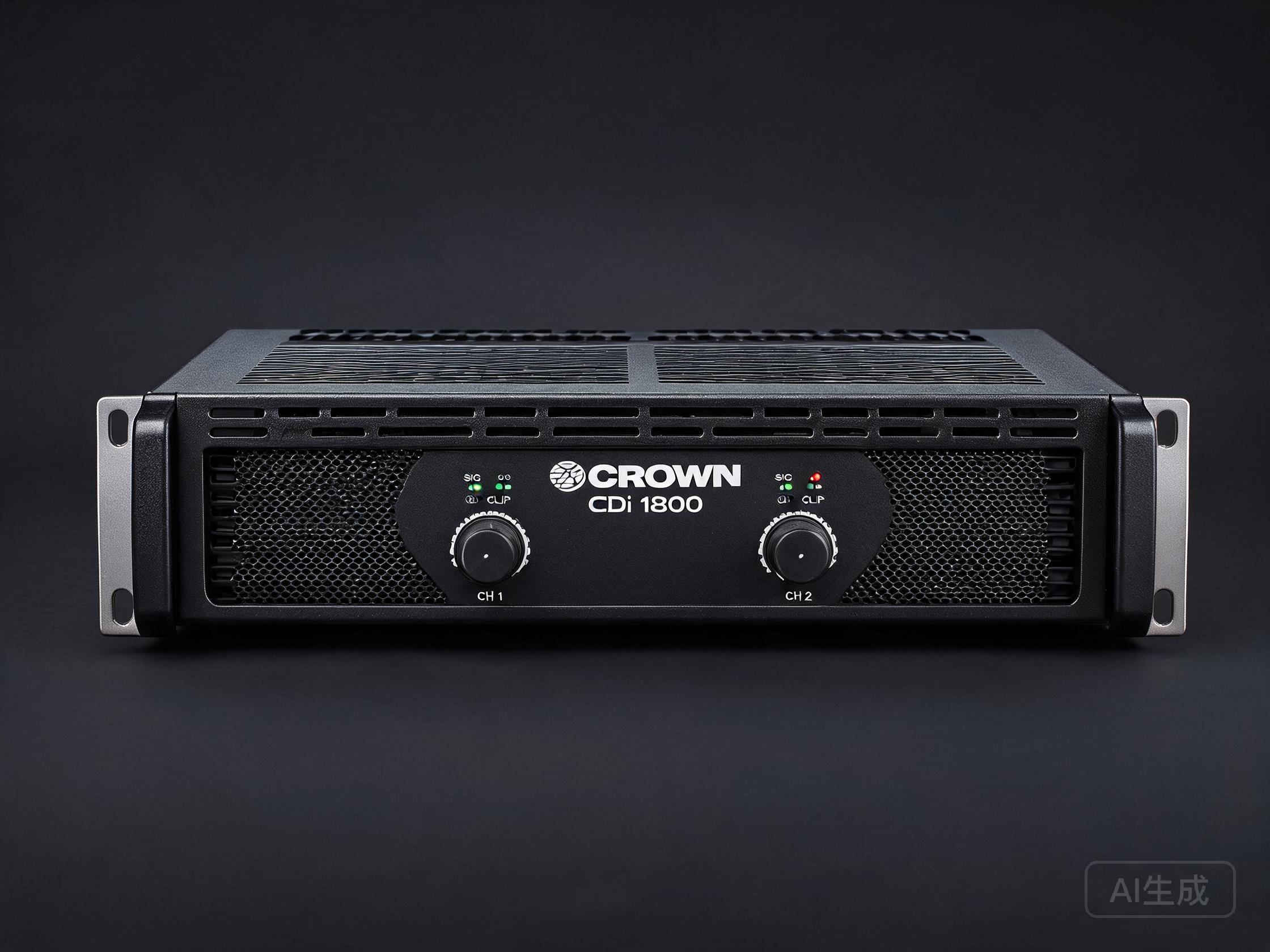
1. Channel count and power per channel – Match the amplifier's output to your speaker loads. For example, a 4-channel amp like the Crown DCi 8|600 delivers 4 x 600W at 4Ω, ideal for multi-zone systems. A 2-channel amp like the Crown CDi 1800 provides 2 x 900W at 4Ω for simpler setups.
2. Class and efficiency – Class D amplifiers are lighter and more energy-efficient than traditional Class AB designs. They are well-suited for continuous operation in venues where heat and power consumption matter.
3. Condition and history – Ask for the unit's service history. Has it been used in a fixed installation or on the road? Road use can mean more wear. Grade A units should show minimal cosmetic wear and pass full load tests.
4. Connectors and compatibility – Check input/output connectors (XLR, TRS, speakON, binding posts). Ensure they match your existing racks and cabling.
5. Protection and cooling – Look for thermal protection, short-circuit protection, and variable-speed fans. These features are critical for reliability in dusty or hot environments.
Acoustrade stocks tested used amplifiers from brands like Crown, QSC, and Lab.gruppen. Each unit is inspected and graded before listing.
Condition grading explained (what Grade A/B/C means in practice)
Used audio gear is typically graded on cosmetic and functional condition. While grading scales vary by seller, here is a general guide:
- Grade A – Excellent condition with minimal signs of use. May have minor scuffs on the chassis but no dents or deep scratches. Fully functional and passes all performance tests. Ideal for front-of-house or client-facing installations.
- Grade B – Good condition with noticeable cosmetic wear such as scratches, rack rash, or faded lettering. Fully functional but may have minor issues like a noisy fan or a scratchy pot. Suitable for backline or budget-conscious projects.
- Grade C – Fair condition with significant cosmetic damage. May have functional issues that require repair. Best for spare parts or non-critical applications.
At Acoustrade, we only list Grade A and B units unless otherwise noted. We provide detailed photos and test results for each unit.
Matching power amplifiers to your venue size and use case
The right amplifier depends on your venue's size, speaker configuration, and program material.
- Small venues (cafés, small bars, retail) – A 2-channel amp like the Crown CDi 1800 (2 x 900W) can power a pair of full-range speakers or a single subwoofer. It's compact and easy to install.
- Medium venues (clubs, restaurants, houses of worship) – A 4-channel amp like the Crown DCi 8|600 (4 x 600W) offers flexibility for multiple zones or bi-amped speakers. It can drive four separate speakers or two bi-amped tops.
- Large venues (nightclubs, live sound, auditoriums) – You'll likely need multiple amplifiers or higher-power models. Consider bridging channels for more power per speaker. For example, two DCi 8|600 units can power a full-range system with subwoofers.
- Touring and rental – Look for amps with robust construction, speakON connectors, and proven reliability. Crown's DCi and CDi series are common in rental inventories.
Always calculate your power needs based on speaker sensitivity, desired SPL, and headroom. A good rule of thumb is to have amplifier power at least equal to the speaker's continuous power rating, with 3 dB of headroom for peaks.
Voltage, plugs and certification for Russia / Middle East / South America / Africa
Power amplifiers are voltage-specific. Before you buy, confirm the following:
- Voltage – Most professional amps support 100–240V via a voltage selector or auto-ranging power supply. However, some units are fixed-voltage. Check the label on the back of the unit.
- Plug type – Different regions use different plugs. For example, Russia uses Type C/F, the Middle East uses Type G (UK) in some countries, South America uses Type A/B/C/I, and Africa uses a mix of types. You may need to replace plugs or use adapters.
- Certification – Many countries require electrical products to carry local certification (e.g., EAC in Russia, CE in Europe, SASO in Saudi Arabia). Confirm with your local customs broker or regulatory authority. Acoustrade does not provide certification; we can provide technical documents to assist your application.
If you are unsure, consult a local electrician. Using the wrong voltage can destroy the amplifier and void any warranty.
Shipping, customs and MOQ when importing from China
Importing used amplifiers from China can be cost-effective, but you need to plan for logistics and duties.
- MOQ – Many suppliers set a minimum order quantity. Acoustrade, for example, has an MOQ of 2 units on the Crown DCi 8|600. This helps cover shipping and handling costs.
- Shipping methods – Air freight is faster but more expensive. Sea freight is cheaper for large orders but slower. For urgent orders, express couriers like DHL or FedEx are an option.
- Customs and duties – Used goods may be subject to import duties, VAT, and inspection fees. Rates vary by country. Check with your customs broker for the correct HS code and duty rate.
- Packing – Ensure amplifiers are packed in original or equivalent boxes with foam padding. Damaged units are a common problem in international shipping.
- Documentation – You'll need a commercial invoice, packing list, and bill of lading. Some countries require a certificate of origin.
Acoustrade ships FOB from China. You are responsible for import clearance and duties.
Common mistakes buyers make
Avoid these pitfalls when buying used amplifiers in bulk:
- Not testing before purchase – Always ask for test results or buy from a seller who offers a warranty. Untested units may have blown channels or noisy fans.
- Ignoring voltage requirements – Assuming all amps work on 220V can lead to costly mistakes.
- Underestimating shipping costs – Shipping and duties can add 30–50% to the unit price. Factor these into your budget.
- Overlooking connector types – Mismatched connectors mean extra adapters or re-cabling.
- Buying without spare parts – For large installations, order spare amps or at least spare fuses and knobs.
- Not considering future needs – Buying underpowered amps may limit your ability to expand.
By following these guidelines, you can source used power amplifiers that deliver reliable performance for years.
Featured used power amplifiers from Acoustrade
- Crown DCi 8|600 – 4-channel, 4 x 600W @ 4Ω, Class D, condition A, FOB $1,850 USD (MOQ 2 units)
- Crown CDi 1800 – 2-channel, 2 x 900W @ 4Ω, Class D, condition A, FOB $980 USD
Browse our full inventory of used amplifiers and other pro audio gear at Acoustrade.